May 20, 2026
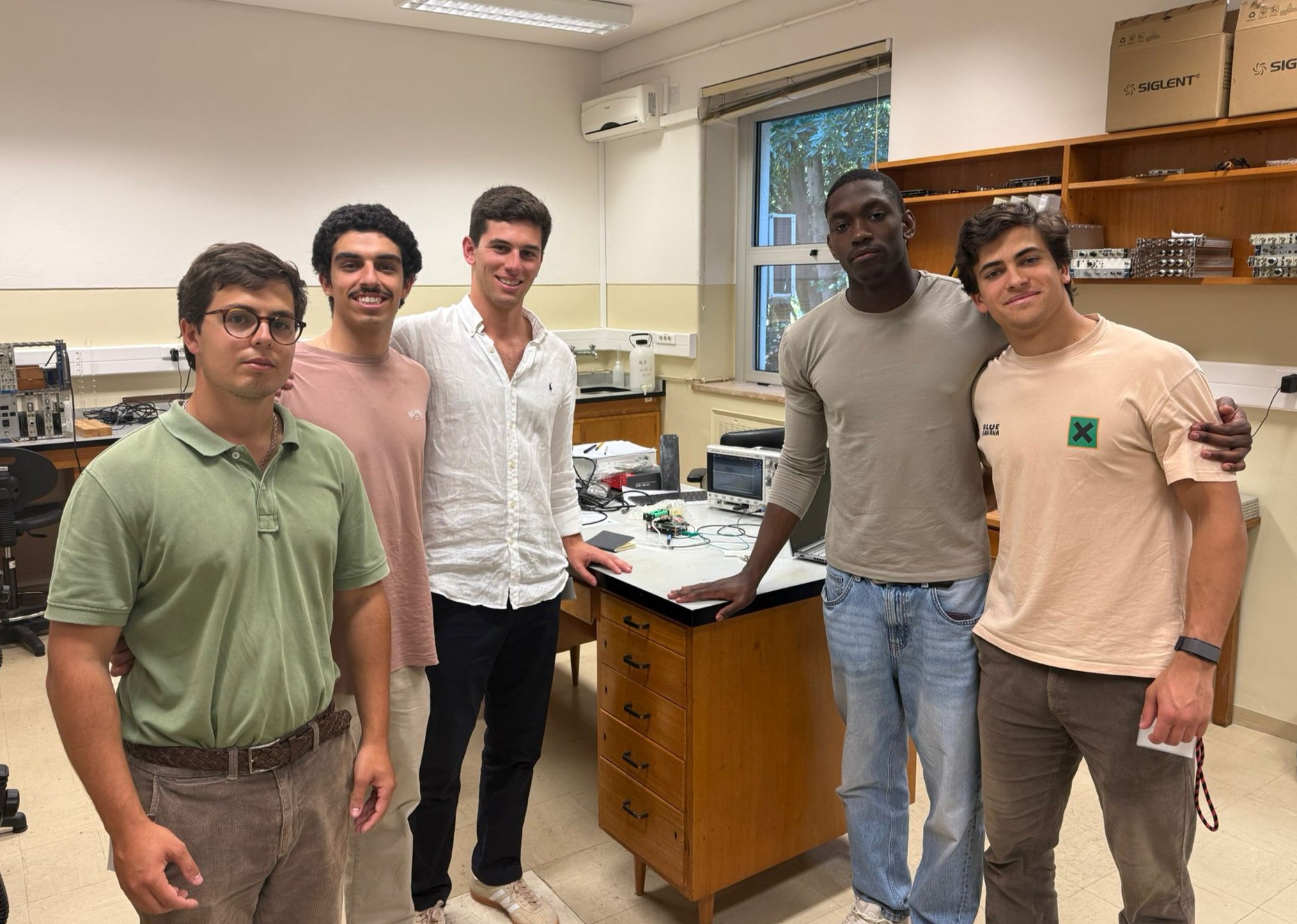
This week we returned to the Campus Tecnológico e Nuclear at IST to put CosmoMeter’s first prototype to the test. It was one of the most productive afternoons of the project so far.
A Small Hiccup
Almost as soon as we arrived, one of the wires powering the board broke. Not the most encouraging start. But we came prepared, soldering iron in hand, and fixed it on the spot. A reminder that fieldwork always has surprises, and being ready for them matters.
Testing with Radioactive Materials
With the prototype back up and running, we tested it against different radioactive materials available at the CTN. Seeing the device respond to real sources was a genuinely exciting moment and a meaningful validation that the core sensing functionality is working as intended.
Analysing the Signal
We also took the opportunity to examine our pulse signal in detail. What we found was that the signal is swinging to negative values. The problem with this is that our ADC can only work with positive voltages, meaning we’re currently only able to use the positive portion of the signal, which works but is far from ideal due to the noise and size of the signal.
With the help of the team at the CTN, we came to a clear conclusion: we need to add an inverter to flip the signal into positive territory so the ADC can work with the full pulse, and an amplifier to bring the signal up to roughly ten times its current amplitude. This will allow us to make use of more bits of the ADC and significantly improve measurement precision.
It’s a well-defined next step, and one we’re confident about.
Overall
We left the CTN with validated results, a fixed prototype, and a clear path forward on the signal conditioning side. Incredibly happy with how the project is progressing.
More updates soon.