March 9, 2026
This week we sat down with João Loureiro, a pilot and flight operations director, for what turned out to be a pivotal meeting. The conversation sharpened our understanding of the project considerably and brought us to a much more concrete vision of what we’re actually building.
Rethinking the Power Source
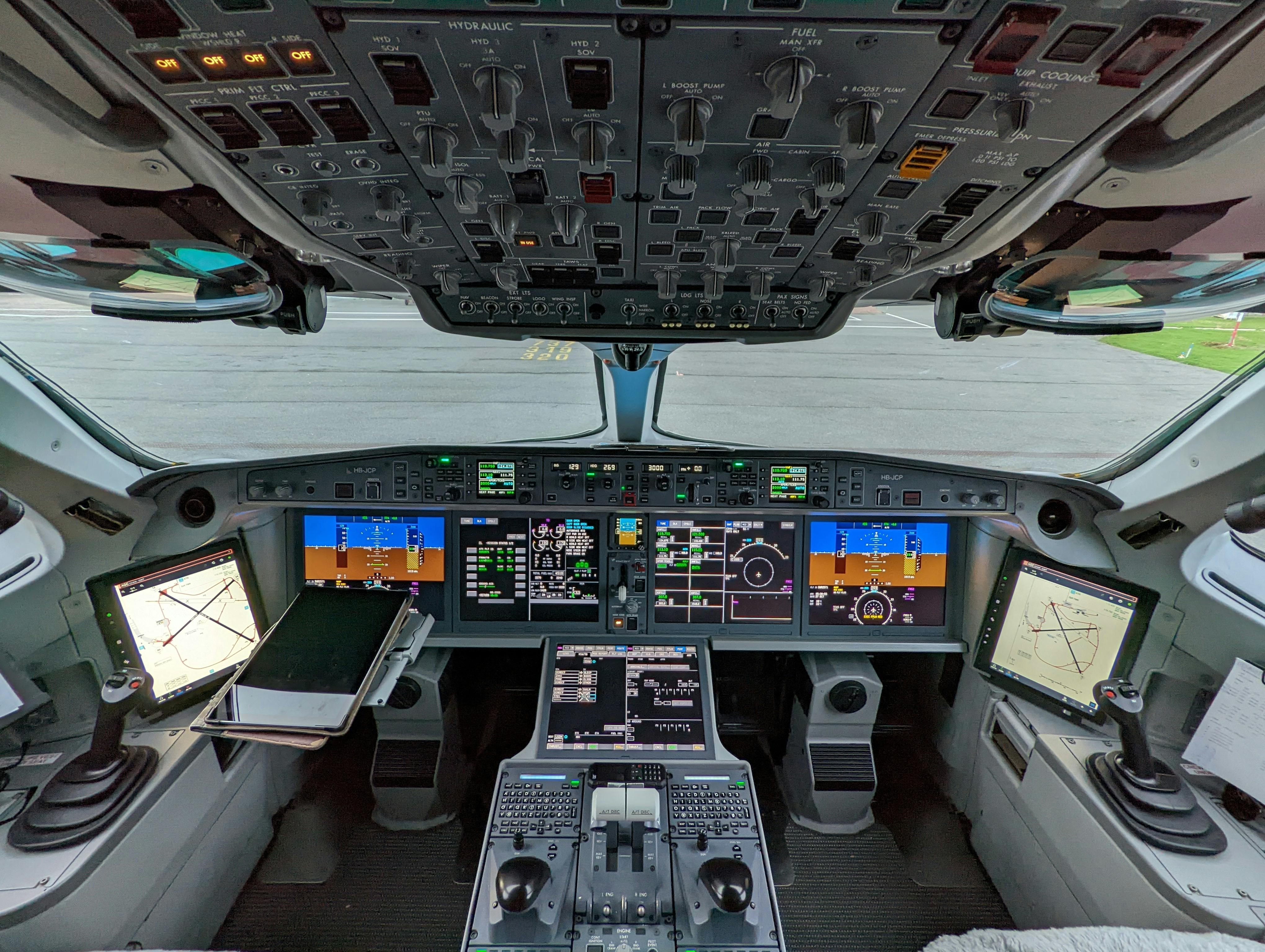
One of the biggest shifts from this meeting was around power. While we had previously considered drawing from the aircraft’s electrical grid, João was clear: doing so would classify our device as an onboard system, triggering an extensive regulatory process that could easily outlast the duration of the project itself. The solution? Use the iPads that pilots and the cabin crew chief already carry on board. This keeps the device personal, practical, and entirely outside the scope of aircraft certification requirements.
The Device Takes Shape
This change in power source also shaped our sensor choice — a Geiger Counter powered directly via USB-C from an iPad, with an appropriate adapter. Small, unobtrusive, and requiring no special onboard approval. We also discussed the possibility of offloading data via Wi-Fi while the aircraft is on the ground at the airport — not a priority for the initial version, but a viable feature down the line — notably, aircraft systems already handle this kind of ground-based data offloading, which is precisely what makes it a realistic option for us.
Who Is This For?
We clarified something important: the prototype is aimed at the crew, not the airline company. Crew members have a personal and professional interest in monitoring their radiation exposure, whereas the company’s primary concern is regulatory compliance. Targeting the crew keeps the device in the realm of a personal tool, which dramatically simplifies everything — from design to testing to deployment. On that note, João confirmed that official crew data won’t be accessible to us, so our approach will centre on voluntary participation within an academic study framework.
A Concrete Project Vision
By the end of the meeting, we had a much clearer picture of what we’re building: a Geiger Counter powered by the iPads of pilots and the cabin crew chief, physically attached to the iPad. A companion app, web app, or software platform would tie it all together.
Regulatory Clarity
João walked us through the regulatory landscape clearly. As a personal device carried by crew rather than a certified aircraft component, conducting an internal company or academic study is entirely feasible without requiring approval from bodies like ANAC. This is a meaningful green light for moving forward with real-world testing, and a path that would be far more difficult to pursue if the device were classified as a boarding component.
Broader Insights
Beyond the technical discussion, João shared valuable context from his career. He was part of APPLA, the Portuguese airline pilots association, which could be a genuinely interested stakeholder in our project, and he also worked in flight safety at Portugália, giving him a well-rounded perspective on both crew-facing and institutional aviation matters.
He also gave us an important scientific insight: the increase in cosmic radiation with altitude is not linear — it’s exponential. This effectively rules out flight schools and low-altitude training aircraft as meaningful testing environments, reinforcing our focus on commercial aviation.
Finally, he raised the possibility that the Portuguese Air Force may have interest in supporting national university projects — another avenue worth keeping on our radar as the project develops.