May 15, 2026
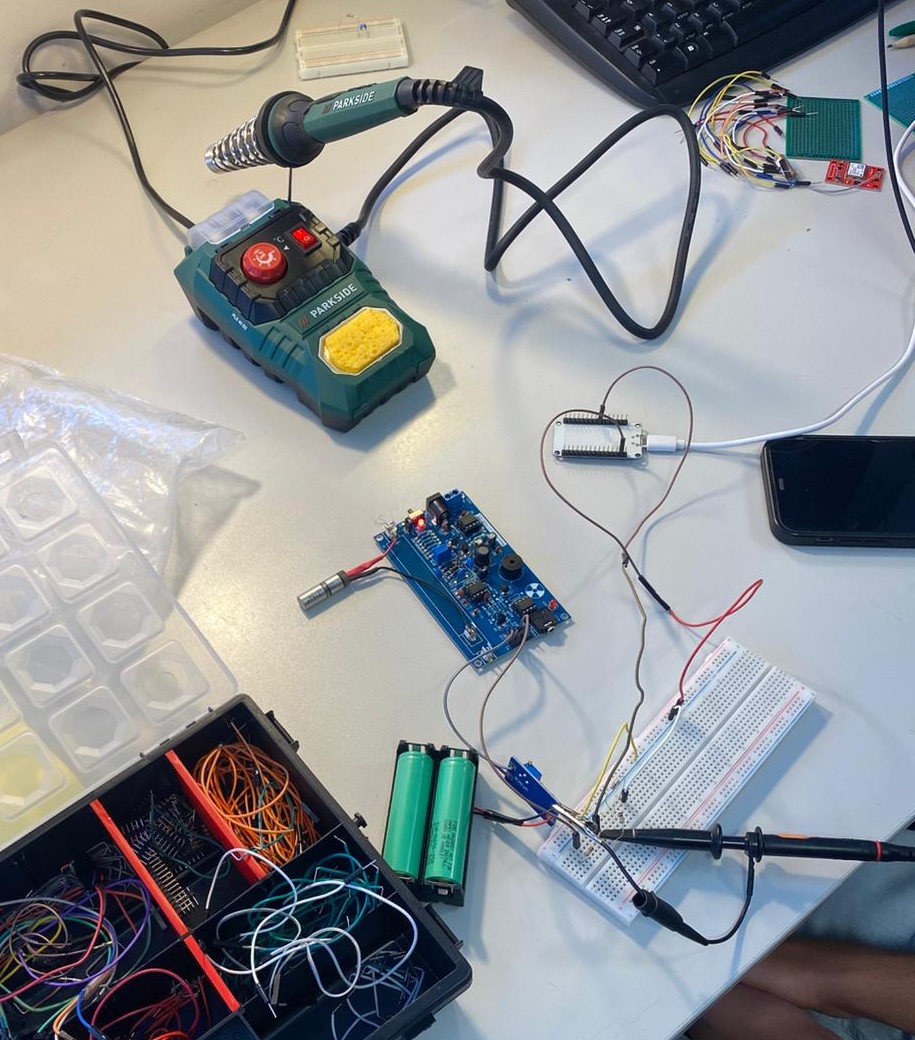
We reached another important milestone this week, we successfully detected the Geiger tube pulses on the oscilloscope and connected the ESP32 to start collecting them.
After getting the Geiger-Müller tube powered correctly, the next challenge was verifying that the detection circuit was actually producing readable signals. Using the oscilloscope, we were finally able to observe the voltage spikes generated whenever the tube detected radiation events.
Seeing those pulses appear on the screen was a great moment for the team. It confirmed that the tube, the high-voltage supply, and the signal conditioning circuit were all working together as expected.
The next step was integrating the ESP32 into the system. We connected it to the pulse output and started reading the events directly from the microcontroller. This is an important milestone because it moves the project from simple hardware validation into real data acquisition.
With the ESP32 now detecting the pulses, we can begin working on counting events, timestamping measurements, and eventually transmitting the data for visualization and analysis.
More updates soon.