This week was highly productive. As previously mentioned, the noise detection algorithm was completed and we had the opportunity to test it in a real environment.
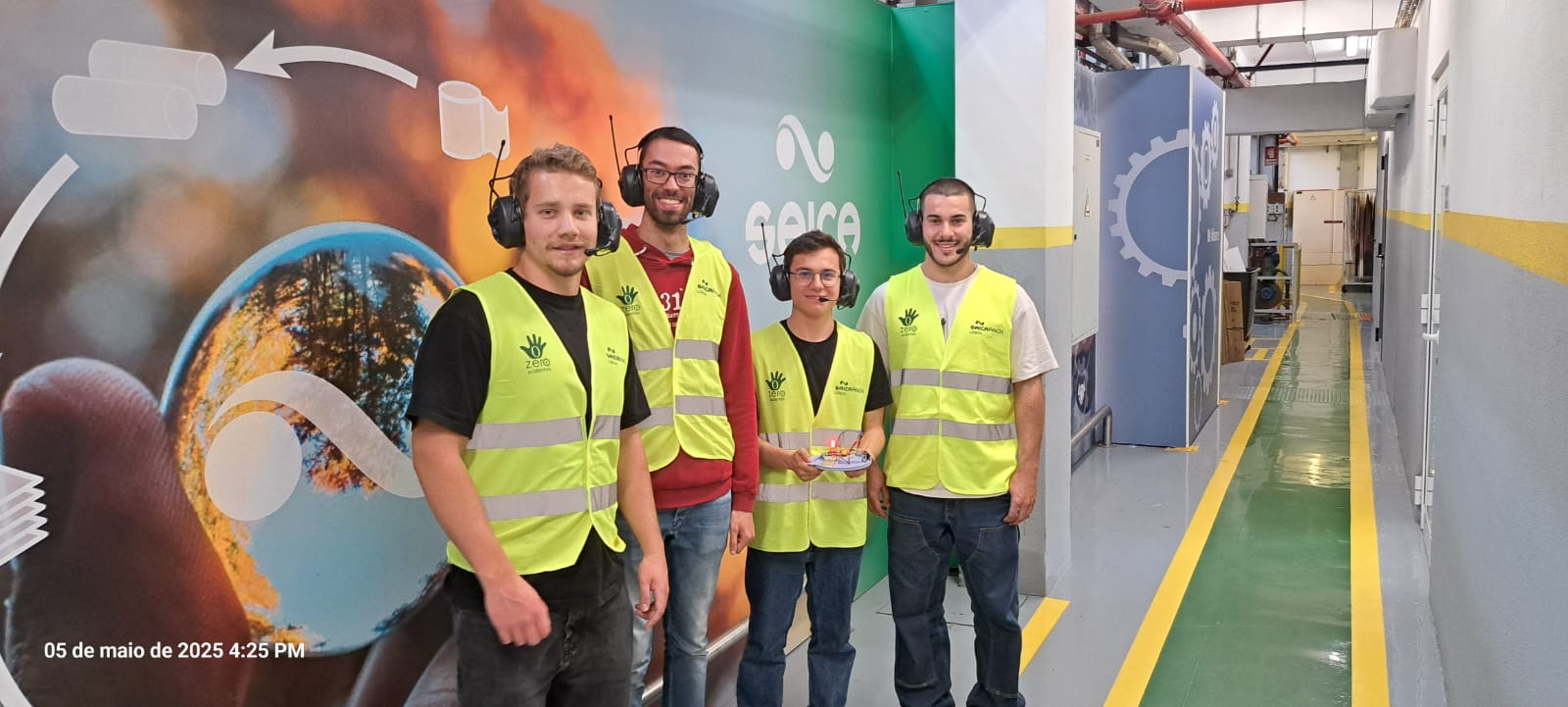
On Monday, part of the team visited the factory of the company we are collaborating with, in order to verify the correct functioning of the algorithm. During this visit, the next date for our return to the factory was also scheduled — May 23rd — this time to test other functionalities of the project that are still under development.
Also on Monday, the midterm presentations took place, with the goal of showcasing to professors and other teams the progress achieved so far. Each group also had the opportunity to present their project in detail and explain the process that led to their developed idea. As was the case with our group, some projects ended up diverging from the initial proposal, as a result of research and contact with companies during P3.
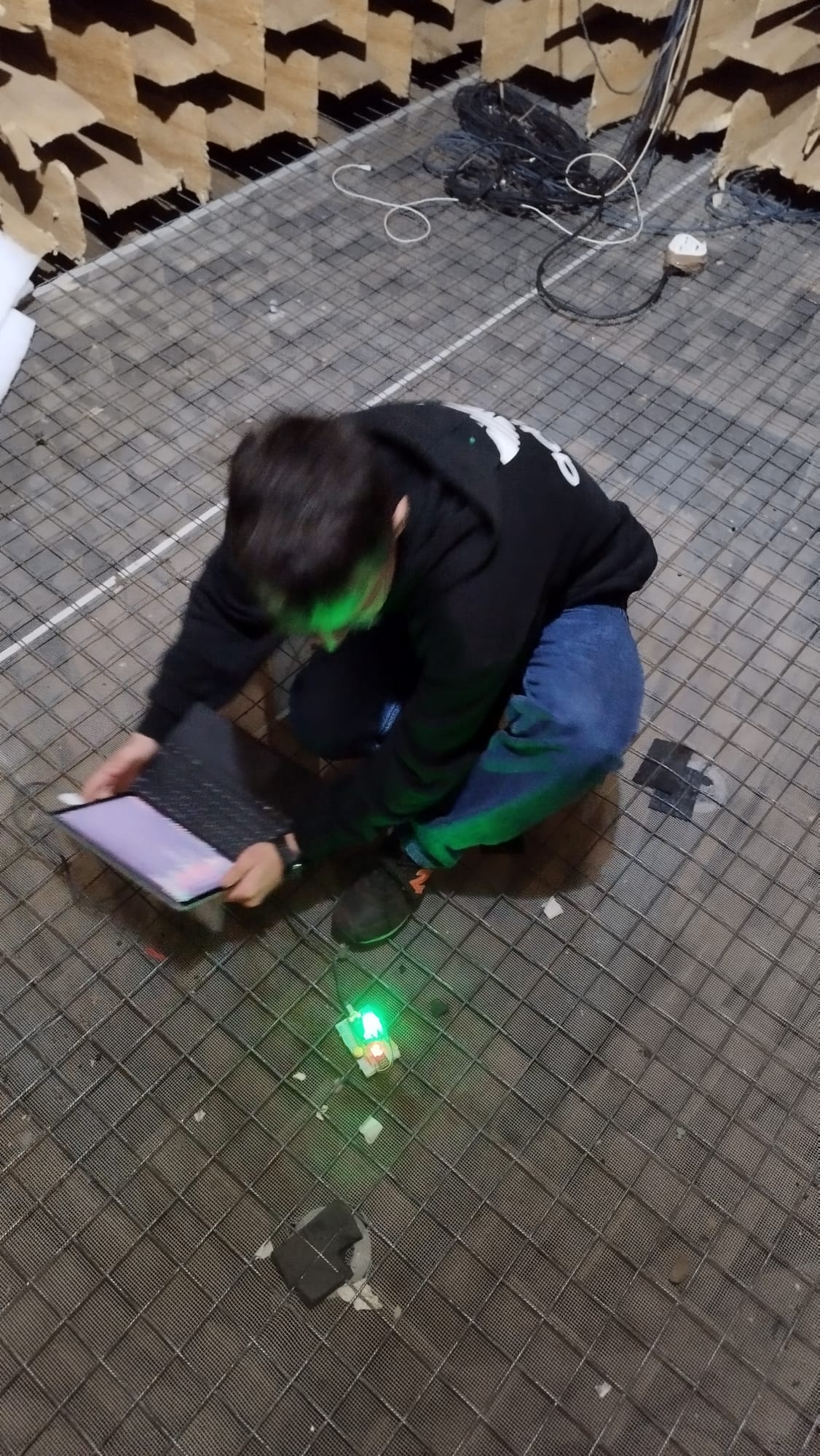
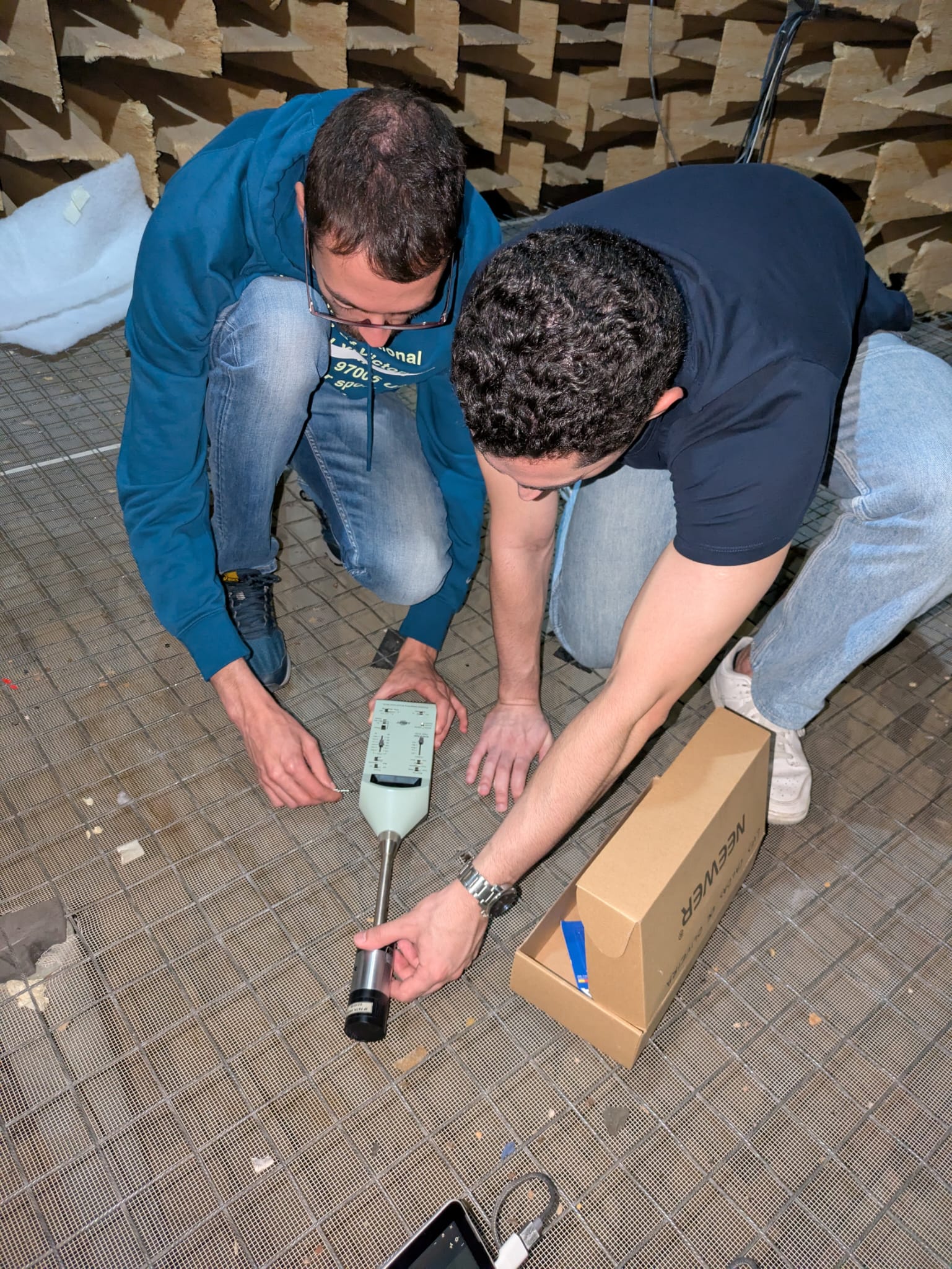
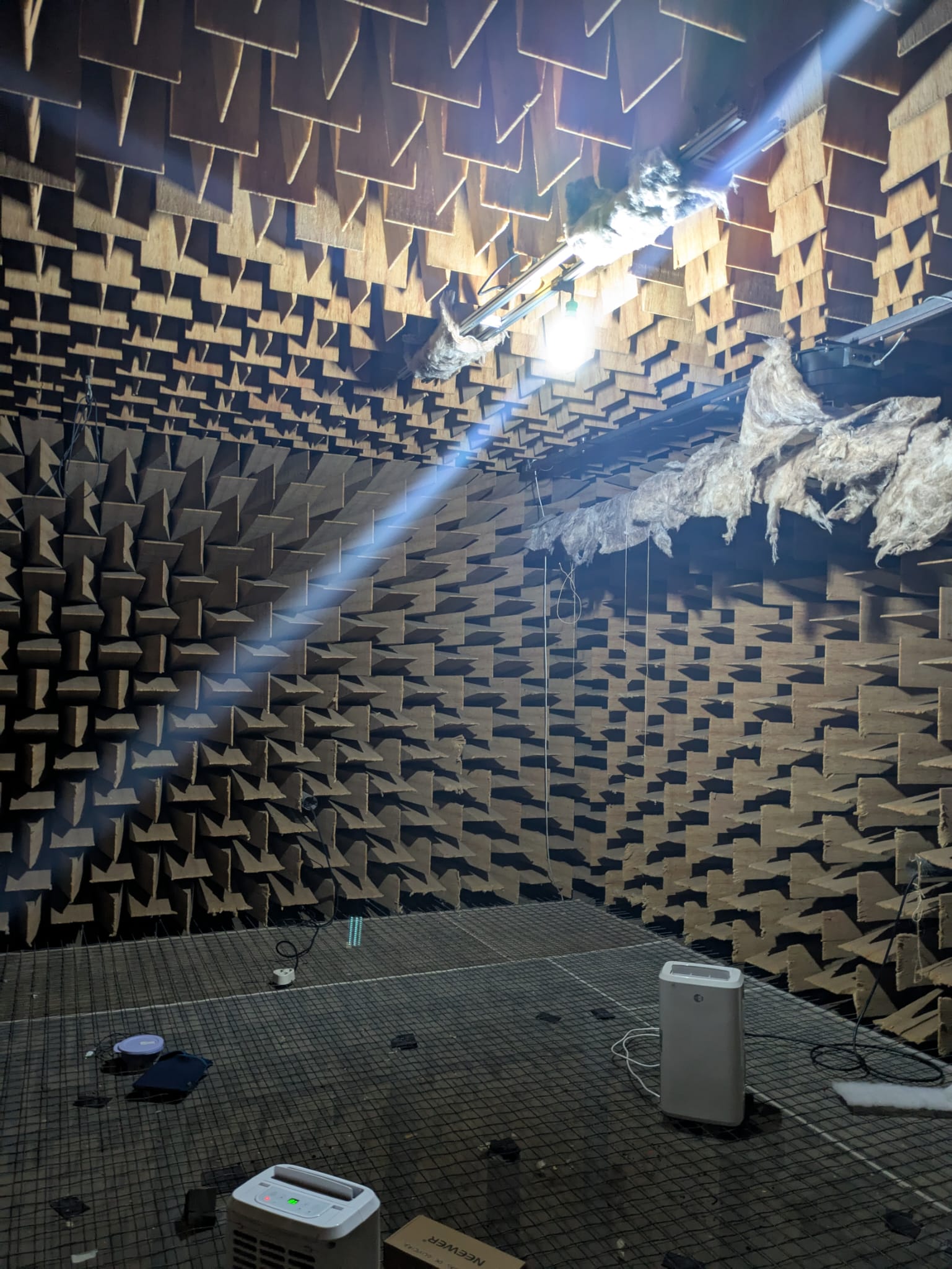
On Thursday, the team had the opportunity to use Técnico’s anechoic chamber to perform the calibration of the noise detection algorithm. This calibration was done using a sound level meter provided by our coordinator, Professor Luís Caldas. The process ran smoothly, requiring only a few parameter adjustments in the developed code. This was a very positive experience — not only did we apply knowledge acquired in previous curricular units, but we also gained access to a facility that, without this project, we would not have had the chance to use.
Throughout the week, work also continued on the development of the data processing platform for the noise detection system and the capacitive sensor. Meanwhile, progress on the capacitive sensor advanced significantly, and it is now ready to be tested.
Additionally, over the past few weeks, some team members have been conducting research related to 3D modeling, with the goal of printing the structures that will house the components used in the project.
