We investigate how technology can empower citizens and non-state actors to take an active role in shaping agendas.
DCLGP aims to build a digital bilingual sign language dictionary with a feature-based search engine that allows people to form visual queries for unfamiliar signs.
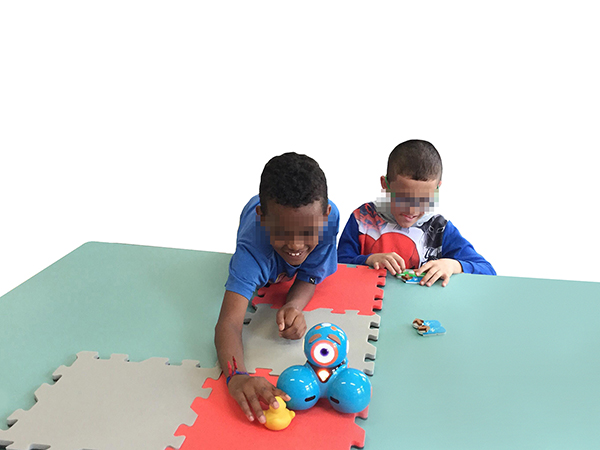
We investigate the use of tangible systems to promote computational thinking skills in mixed-ability children.
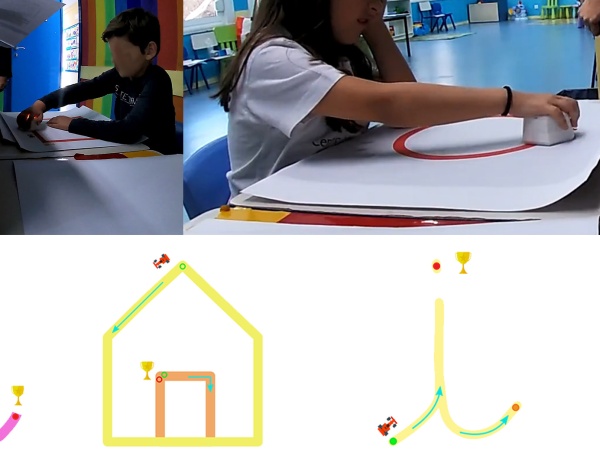
We investigate the use of social robots to create inclusive mix-visual ability classrooms.
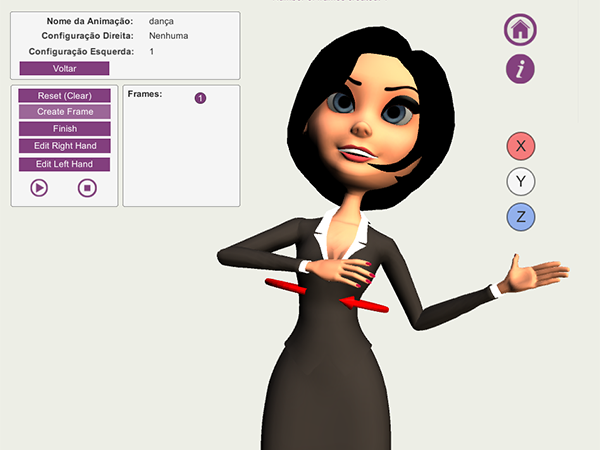
AVATAR proposes creating a signing 3D avatar able to synthesize Portuguese Sign Language.
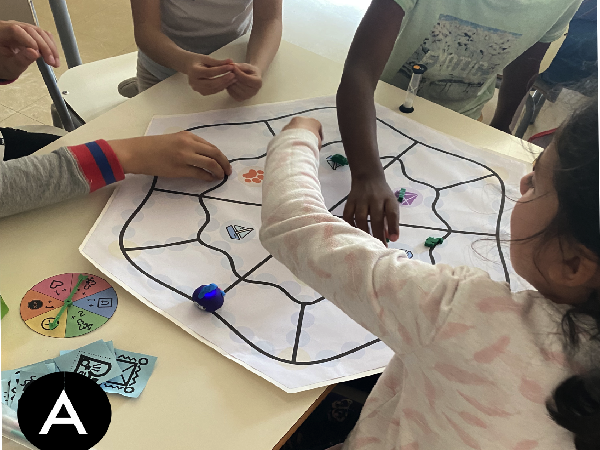
We explore how to create inclusive environments and behaviours with and through games.
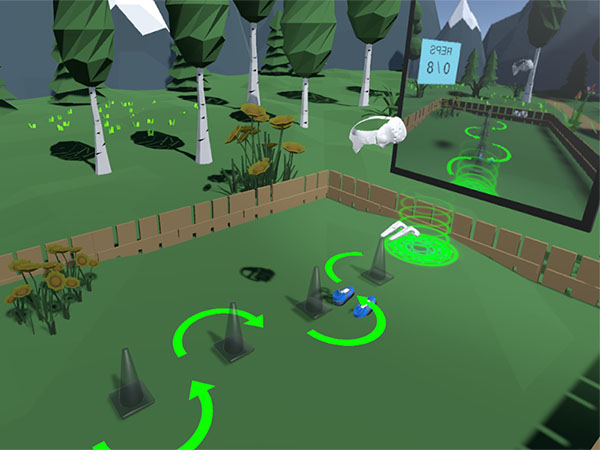
ARCADE proposes leveraging interactive and digital technologies to create context-aware workspaces to improve physical rehabilitation practices.
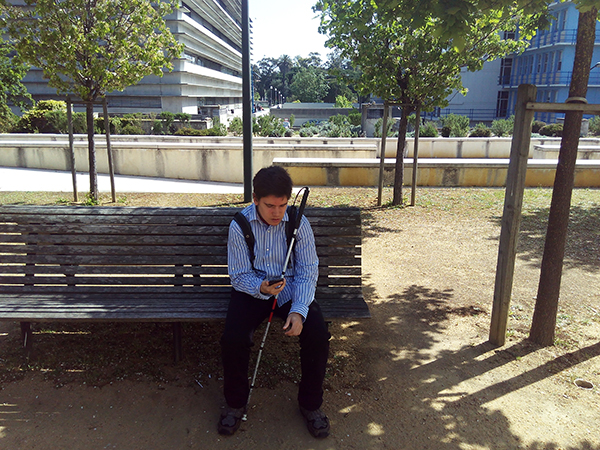
In this project, we are creating the tools to characterize user performance in the wild and improve current everyday devices and interfaces.
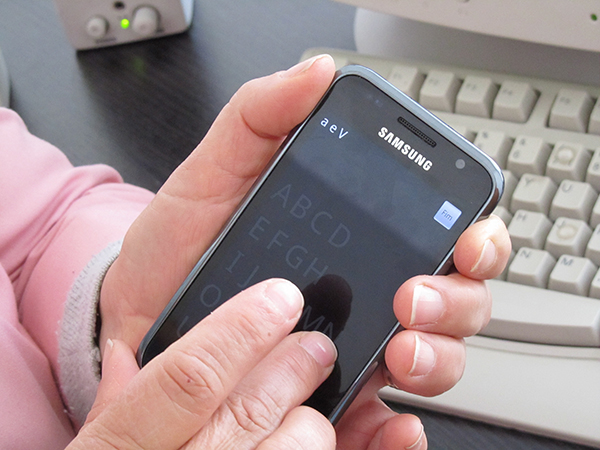
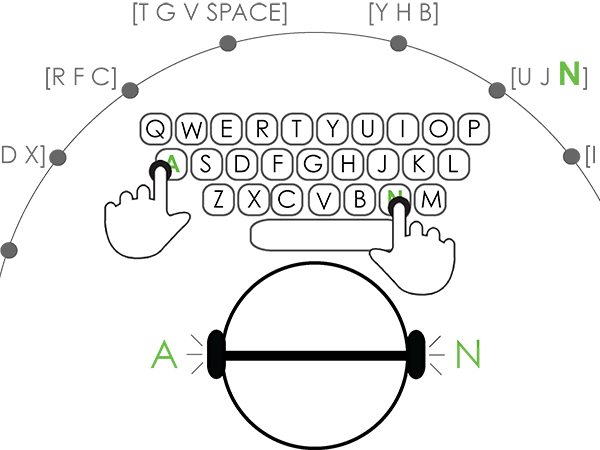
We are creating novel non-visual input methods to multiple form-factors: from tablets to smartwatches.
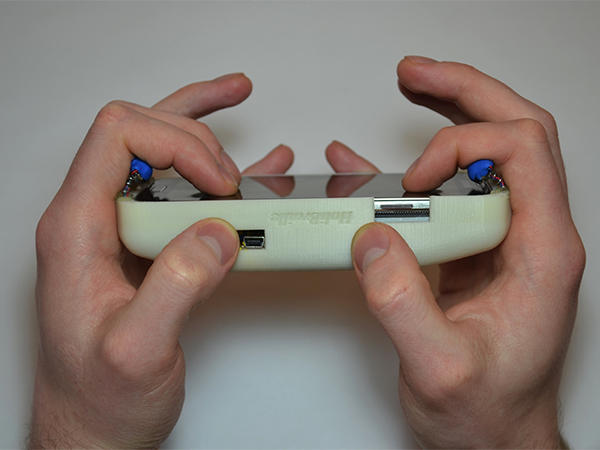
As touchscreens have evolved to provide multitouch capabilities, we are exploring new multi-point feedback solutions.
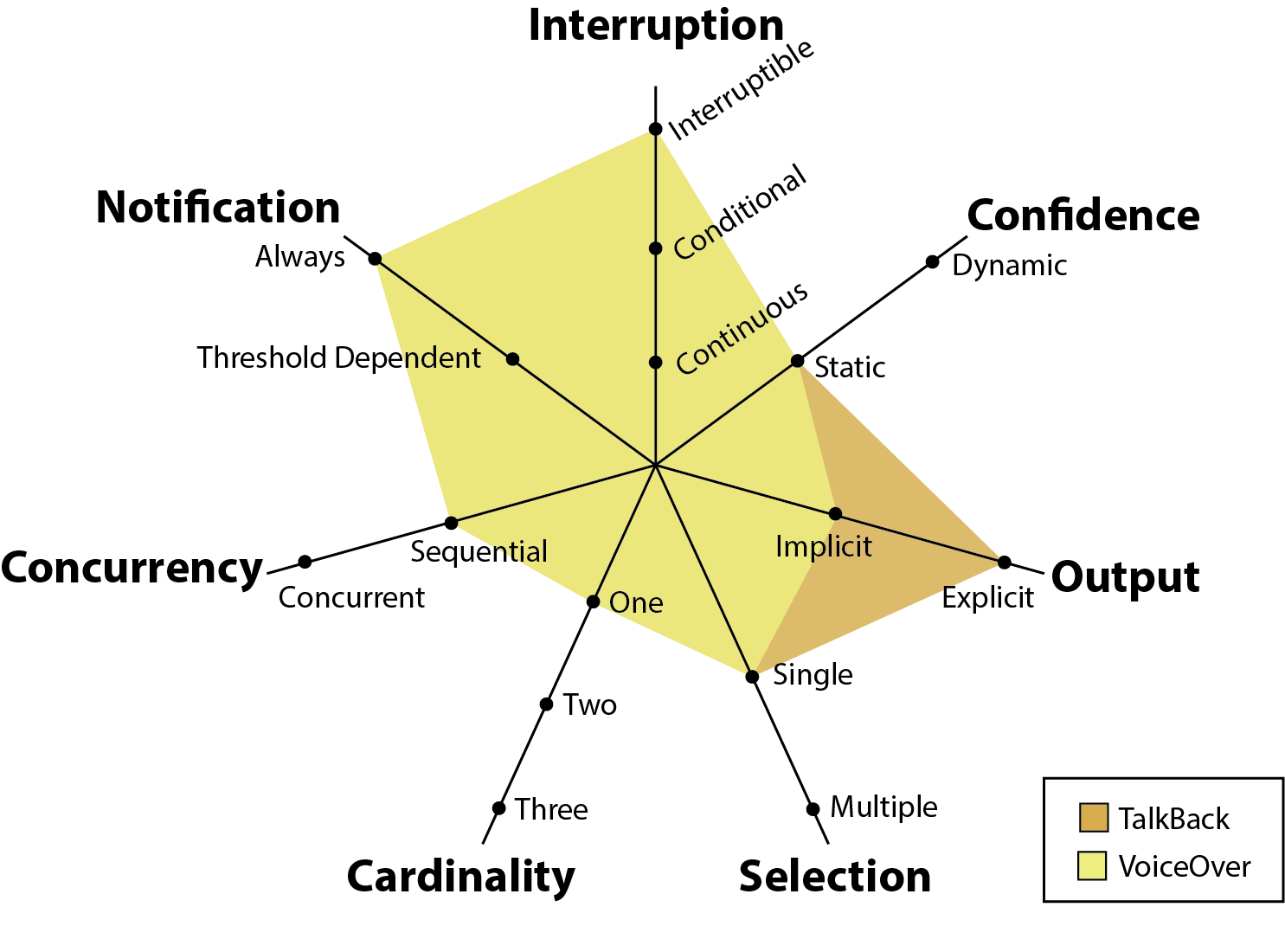
In this research work, we are investigating novel interactive applications that leverage the use of concurrent speech to improve users' experiences.
We investigate novel interfaces and interaction techniques for nonvisual word completion. We are particularly interested in quantifying the benefits and costs of such new solutions.
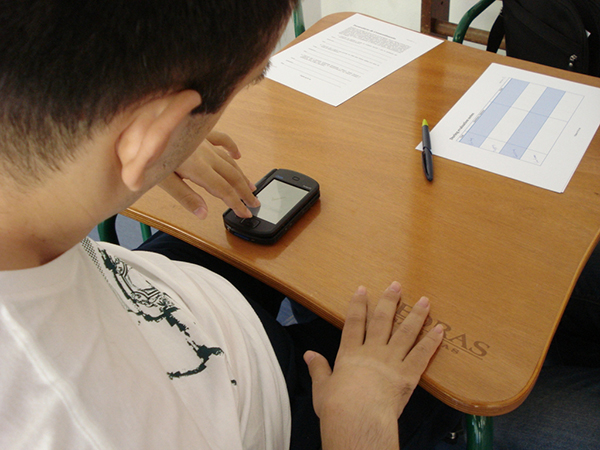
Our goal is to thoroughly study mobile touchscreen interfaces, their characteristics and parameterizations, thus providing the tools for informed interface design.
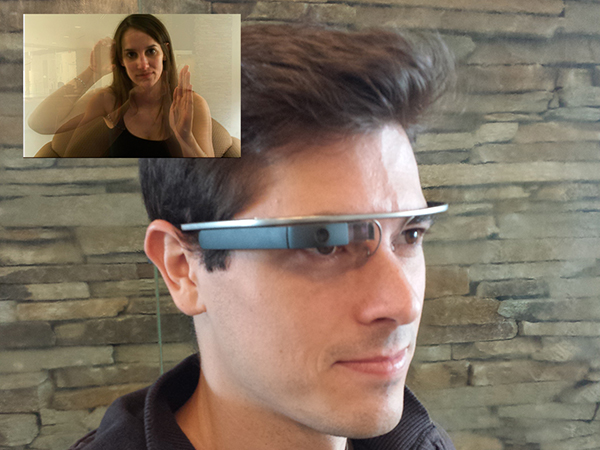
This research leverages mobile and wearable technologies to improve classroom accessibility for Deaf and Hard of Hearing college students.
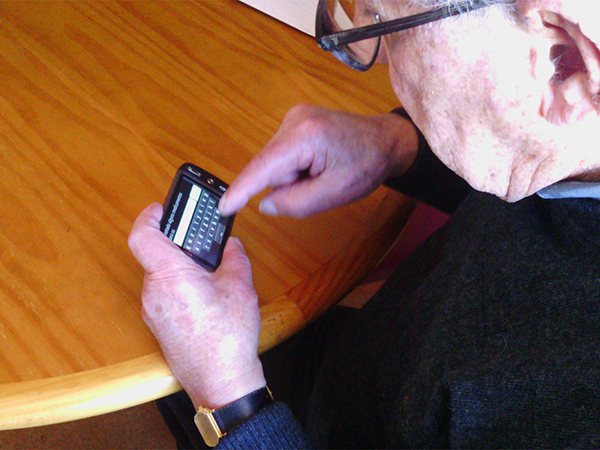
We aim to understand the overlap of problems faced by health and situational impaired users when using their mobile devices and design solutions for both user groups.
Conference attendance is predominantly passive: audiences sit, listen, and hope to absorb information. Yet, active learning research demonstrates that participation outperforms passive reception. We present Slide.Bingo, an interactive system that uses generative AI to transform presentation content into personalised bingo cards, aiming to give each attendee a task to perform and specific targets to attend to during sessions. The bingo format provides sustained engagement, directed attention, and social presence through real-time awareness of other players. Designed for conference-scale deployment, the system supports two card policies: an Individual Card Policy for paper/panel sessions and a Shared Card Policy for demo/poster sessions. Presenters can customize their content and add custom statements for key takeaways. At CHI 2026, attendees can use Slide.Bingo as their conference schedule app, experiencing Slide.Bingo across the programme. Visitors to our interactivity booth will be able to interact with a demo presentation or customize Slide.Bingo content for their own papers.
Under the premises of efficiency and cost savings, service providers are increasingly going digital. As a consequence, underserved groups experience digital services as an additional barrier to participating in society. To overcome those barriers, many rely on often-invisible support networks, including family or friends, as well as governmental organisations and NGOs. In this article, we draw on qualitative studies of two NGOs, one based in Helsinki and the other in Lisbon, to reflect on the work they do to support people who use digital services. Our findings show that intermediaries support them in at least three interrelated ways. First, through complementary practices such as teaching and advising, configuring spaces to lower engagement thresholds, and translating complex information. Second, by participating on behalf of users, for instance, when contacting service providers or acting as proxies in design processes. Third, by sustaining the efficiency of digital services through invisible work. We contribute to research on digital inclusion by showing how intermediaries shape both access to and users’ agency in digital services.
Social play is an essential pathway for emotional, cognitive, and social development in children. However, Deaf and Hard of Hearing (DHH) children often experience barriers to social play, namely in mixed-hearing ability environments (e.g., school playground). In this paper, we conducted interviews with six educators and 19 children with and without hearing loss at a Partially Bilingual School, to better understand their experiences during social play. Moreover, we observed a school playground with 46 children over seven weeks at a Full Bilingual School. Findings show that social play between DHH and hearing children is influenced by school culture, peer culture, and child agency. Importantly, some of these barriers can be (partially) overcome through a supportive bilingual and bicultural environment. We propose the concept of contextualized social play technology, which defines a design space aimed at fostering peer culture and individual agency through contextualization within schools. We also provide design insights to inform the development of future inclusive play technologies.
This workshop explores value alignment for participatory AI, focusing on interfaces and tools that bridge citizen participation and technical development. As AI systems increasingly impact society, meaningful and actionable citizen input in their development becomes critical. However, current participatory approaches often fail to influence actual AI systems, with citizen values becoming trivialized during translation to technical requirements. The workshop brings together researchers and practitioners from HCI, AI, and social sciences to address challenges such as risk articulation, value evolution, democratic legitimacy, and the translation gap between community input and system implementation. Topics covered include interactive demonstrations of interfaces (or other ‘boundary objects’) for value elicitation within different communities, critical analysis of failed participatory attempts, methods for capturing evolving community values, and approaches for making citizen concerns actionable for developers.
Existing ethics frameworks for participatory engagement in HCI often overlook the nuanced ethical challenges of dynamic community-based contexts given the latter’s relational nature. We hope to bridge this gap by grounding feminist care ethics in actionable tools for community-based projects to enhance ethical engagement in these settings. Prior research advocates for adaptable, context-sensitive ethics in participatory research, informed by feminist care ethics. To address this need, we developed and iteratively refined a toolkit embodying the underlying principles of feminist care ethics through workshops with participants working in academic and non-academic community-based settings. Our findings suggest that the toolkit fosters ethical reflection aligned with the feminist care ethics ethos while facilitating meaningful experiences for participants. This work contributes to the field by offering a practical design artefact that not only embodies feminist care ethics but also supports researchers and communities in navigating complex ethical landscapes in participatory engagements, together or independently.
Access to public spaces is of the utmost importance for social cohesion, inclusion, and civic engagement. Nevertheless, a large majority of public spaces remain incredibly uncomfortable environments for neurodivergent individuals due to, for instance, the unpredictability of such spaces and the sensory stimuli within them. Smart City technologies present an exciting opportunity to improve the accessibility and enjoyment of the spaces where they are deployed by, for instance, offering users the ability to customise a space to their specific sensory needs. However, the research topic of public space technologies for neurodivergent individuals remains scattered and sparsely documented. This critical review analyses the existing domains of inquiry, contributing a theoretical framework based on Spatial Justice and Neuroqueer Technoscience and suggests future research avenues informed by this framework. We advocate for the participatory co-creation of a neurodivergent-affirming landscape of public space technologies that both support neurodivergent needs and promote neurodivergent joy.
The popularity of accessibility research has grown recently, improving digital inclusion for people with disabilities. However, researchers, including those who have disabilities, have attempted to include people with disabilities in all aspects of design, and they have identified a myriad of practical accessibility barriers posed by tools and methods leveraged by human-computer interaction (HCI) researchers during prototyping. To build a more inclusive technological landscape, we must question the effectiveness of existing prototyping tools and methods, repurpose/retrofit existing resources, and build new tools and methods to support the participation of both researchers and people with disabilities within the prototyping design process of novel technologies. This full-day workshop at CHI 2025 will provide a platform for HCI researchers, designers, and practitioners to discuss barriers and opportunities for creating accessible prototyping and promote hands-on ideation and fabrication exercises aimed at futuring accessible prototyping.