Second Week - Project Redefinition




Table of Contents
Introduction
At the end of the first week, we regrouped and analyzed the information we had gathered—both from our conversations with professionals and our research into the feasibility of our initial proposal (the automated pillbox). After careful consideration, we concluded that this was not the best idea to pursue.
Reflecting on our in-person discussions from the previous week, we identified a key issue: many caregivers struggle to monitor and support elderly individuals as effectively as they would like. This led us to consider developing a wearable device, such as a bracelet, that would allow for easy tracking of the person using it.
We immediately began researching existing solutions and quickly realized that several products on the market already serve this purpose. However, we wanted to explore ways to innovate and make our solution more comprehensive.
Without committing to a specific approach just yet, we brainstormed possible features and sensors that could be incorporated into the wearable device. We understood that in a later stage of the project, we would need to carefully select the most suitable components, but for now, we aimed to explore all possibilities to ensure we were taking an innovative approach.
Once we had a preliminary concept for our product, we structured the tasks for the week. Given that our conversations with associations had been highly productive in the first week, we decided to continue with this approach.
To maximize the value of these interactions, we outlined the following strategy for our discussions with professionals and associations:
- Initial Phase: Focus exclusively on understanding the needs and challenges caregivers face when supporting elderly individuals—without introducing any specific solution.
- Presentation Phase: After gathering unbiased insights, transparently present and describe the solutions we had been considering.
This method allowed us to collect impartial feedback on which solution would be most effective, without influencing responses by revealing our chosen approach too soon.
With this in mind, we developed a new project proposal (our current concept), aimed at addressing the needs of informal caregivers. We presented this updated idea to our advisor at the beginning of the week. While he found it promising, he raised important questions about potential challenges. He also suggested that we explore an alternative focus: instead of assisting informal caregivers, we could shift towards optimizing care management for professional caregivers who visit multiple patients at home and need to efficiently coordinate their responsibilities. We took on this challenge and explored it throughout the week.
Our new Project Proposal
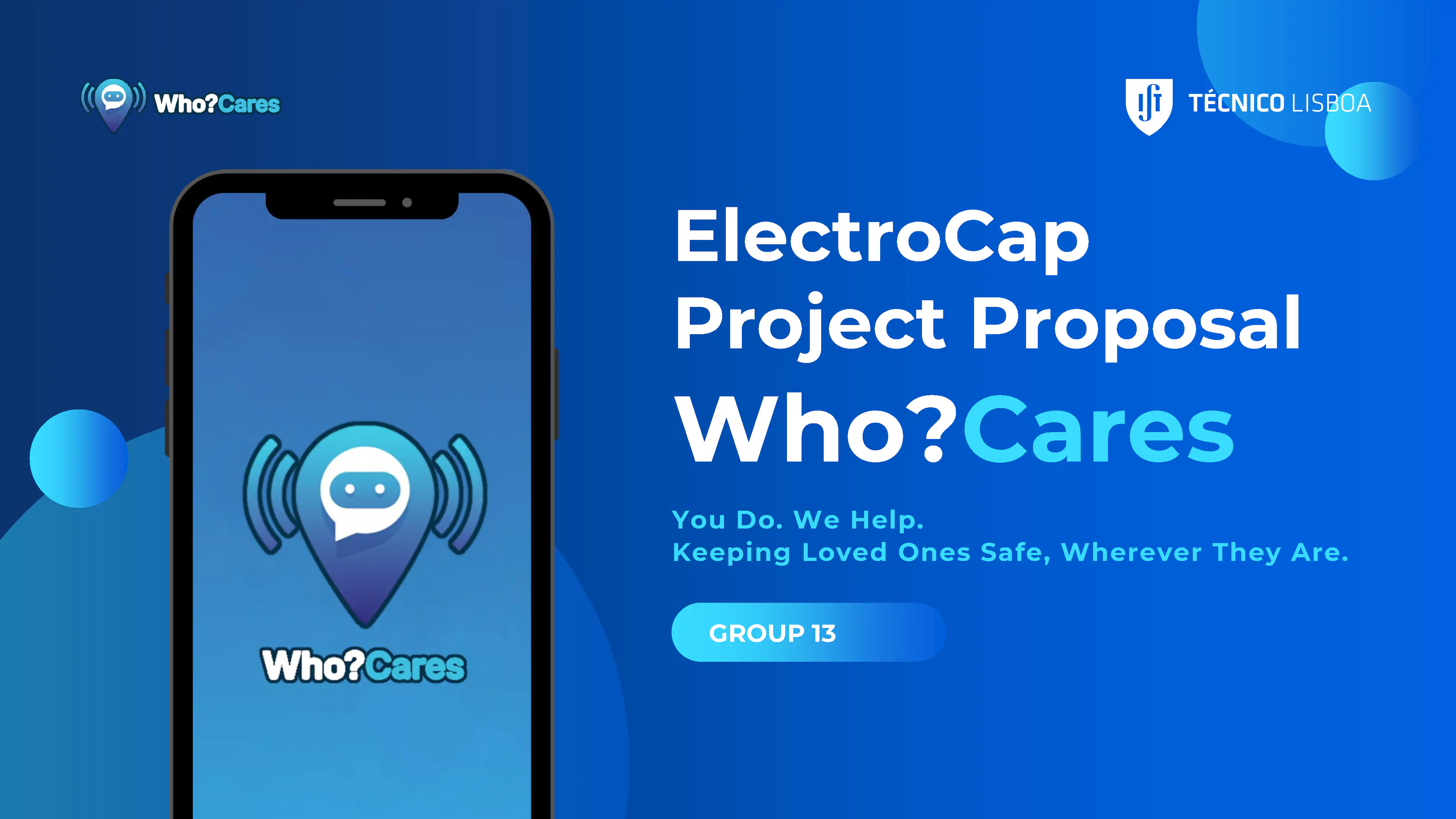
At first, we believed that the best way to support caregivers was by improving their ability to monitor elderly individuals in real-time. Many caregivers struggle with constant worry—especially when dealing with loved ones who are prone to wandering or accidents. That’s why we initially envisioned a wearable tracking device that would allow caregivers to locate seniors easily and receive alerts in case of emergencies.
However, as we researched existing solutions, we quickly realized that location-tracking wearables are already widely available. While useful, they are often limited in functionality, leaving caregivers with many unanswered questions about the well-being of the person they are looking after. Where exactly are they going? Are they eating properly? Have they fallen? How can caregivers react when something unexpected happens? These concerns led us to rethink our approach.
Instead of focusing solely on location tracking, we decided to create a more intelligent and proactive support system—one that not only alerts caregivers when something goes wrong but also helps them navigate the challenges of elderly care.
With this in mind, our solution now consists of two key components:
- A wearable device equipped with GPS, Bluetooth tracking, and fall detection to provide real-time monitoring, both indoors and outdoors. If an elderly individual leaves a designated safe zone or exhibits unusual activity at home, caregivers will receive instant alerts.
- An AI-powered chatbot, integrated into a mobile app, designed to answer caregivers’ questions and provide real-time guidance. Whether they need advice on handling a fall, managing daily routines, or finding professional assistance, the chatbot will offer immediate support.
By combining real-time alerts with intelligent assistance, our goal is to reduce caregiver stress, improve safety, and enhance overall care quality.
People and Associations We Spoke With
As part of our research, apart from many phone calls and exchanged emails with caregiving-related organizations, we visited two organizations this week that work closely with the elderly—seeking insights from professionals who understand the daily challenges faced by both caregivers and seniors. These conversations were crucial in helping us refine our solution and ensure that it addresses real needs.
Meeting with the Social Worker at a Day Center
(Hugo Soares & Gonçalo Barbosa conducted this interview)
Our first visit took us to another Day Center, where we spoke with a social worker about the struggles of informal caregivers and elderly individuals. The discussion provided several key takeaways:
- Caregivers need more information about the well-being and daily routines of the elderly. Many experience constant anxiety about their loved ones, especially when they are not physically present.
- Medication management is not the biggest challenge. Professional caregivers already oversee this process, and many organizations use effective paper-based tracking systems.
- Wandering is a serious concern, particularly for seniors with dementia. Many elderly individuals get disoriented and lost, even in familiar areas near their homes.
- A wearable tracking solution could be valuable, but only if it is practical and affordable. The social worker emphasized that for a device to be widely adopted, it must be aesthetically discreet and financially accessible.
- Additionally, apps like MySenior already help improve schedule management efficiency for formal caregivers who care for multiple elderly individuals, reducing the need for a solution that optimizes this process.
This conversation confirmed that a medication-focused solution would not be the best approach, pushing us to focus on a broader real-time monitoring system instead.
Interview with the Social Worker from an Home Care Service
(Hugo Soares & Gonçalo Barbosa conducted this interview)
We also had the opportunity to speak with a social worker from a home care company that provides in-home assistance to elderly individuals. This conversation highlighted additional challenges that both caregivers and seniors face:
- The Emotional Toll on Informal Caregivers
Caring for a loved one is not just a logistical challenge—it’s an emotional burden. Many informal caregivers struggle to disconnect, feeling a constant responsibility for the elderly person’s well-being. This often leads to stress, exhaustion, and burnout. Additionally, many caregivers are unaware of existing support services that could ease their workload.
- Resistance to New Caregivers
Introducing a new caregiver into an elderly person’s life is not always easy. Seniors are often reluctant to accept help from strangers, making transitions difficult. The social worker emphasized that psychological support is key in these situations and that frequent changes in caregivers can negatively impact the elderly person’s well-being.
- The Need for Continuous Health Updates
One of the biggest concerns for professional caregivers is keeping track of an elderly person’s condition over time. While some systems allow caregivers to log updates about a senior’s health and behavior, there is still room for improvement in ensuring continuous and efficient information sharing.
- Efficiency in Managing Multiple Patients
We also explored whether professional caregivers struggle with managing multiple seniors throughout the day. However, the response was clear: existing tools already support this workflow effectively, like MySenior, and this was not the most urgent problem that needed solving.
- Technology’s Role in Caregiving
When discussing potential solutions, the social worker found two ideas particularly promising:
- A location-tracking wearable: She agreed that this could be valuable but stressed the importance of making it discreet and easy to wear, so that seniors wouldn’t reject it.
- An AI-powered chatbot: This was met with enthusiasm, as it could provide quick access to essential caregiving information—not just for emergencies, but also for daily guidance, such as recommending support services, suggesting physical activities, or providing dietary advice.
Week Recap
Looking back at this week, our direction has become much clearer. Initially, we considered shifting our focus toward professional caregivers after our professor suggested that improving the management of multiple seniors could be a valuable challenge to tackle. However, after speaking with social workers and gathering insights from those directly involved in caregiving, we realized that this problem already had established solutions—and was not where we could make the biggest impact.
Instead, our conversations reinforced an issue that was far more pressing: informal caregivers lack real-time support. These individuals, often family members, struggle with constant worry and uncertainty, unsure of how to handle unexpected situations. Medication management, while important, is not their primary challenge—especially since professionals already oversee this process in many cases.
From these discussions, three key insights shaped our refined approach:
- Tracking alone isn’t enough. While a wearable device could help prevent wandering, caregivers need more than just location updates. They require actionable guidance to respond effectively when challenges arise.
- A combined solution is essential. A tracking wearable has value, but to truly alleviate stress, it must work alongside an intelligent support system that helps caregivers feel confident in their decisions.
- An AI-powered chatbot could be transformative. Beyond emergency support, it could offer practical caregiving advice, suggest useful resources, and assist with day-to-day challenges—making it a valuable companion for caregivers.
These takeaways gave us the confidence to commit fully to our updated project vision: a wearable tracking device integrated with AI-powered support, designed to empower caregivers and enhance the safety and well-being of elderly individuals.
With this direction set, our focus moving forward will be primarly to begin developing our website and then start thinking about refining our system design and start mapping out the technical components that will bring our vision to life. The insights we’ve gathered have provided a strong foundation, and we are excited to move forward with confidence.