Biography
Manuel Ribeiro is an Auxiliary Researcher at Centro de Recursos Naturais e Ambiente (CERENA), Instituto Superior Técnico, Universidade de Lisboa. He holds a Ph.D. in Environmental Engineering from Universidade de Lisboa, an M.Sc. in Geographic, Demographic and Environmental Information Systems, and a B.Sc. in Statistics and Information Management from Universidade Nova de Lisboa. Before joining Universidade de Lisboa, he was a researcher at the cancer hospital Instituto Português de Oncologia (IPO Lisboa) in Lisbon and previously worked as a consultant for DHV, a multinational engineering consultancy based in the Netherlands.
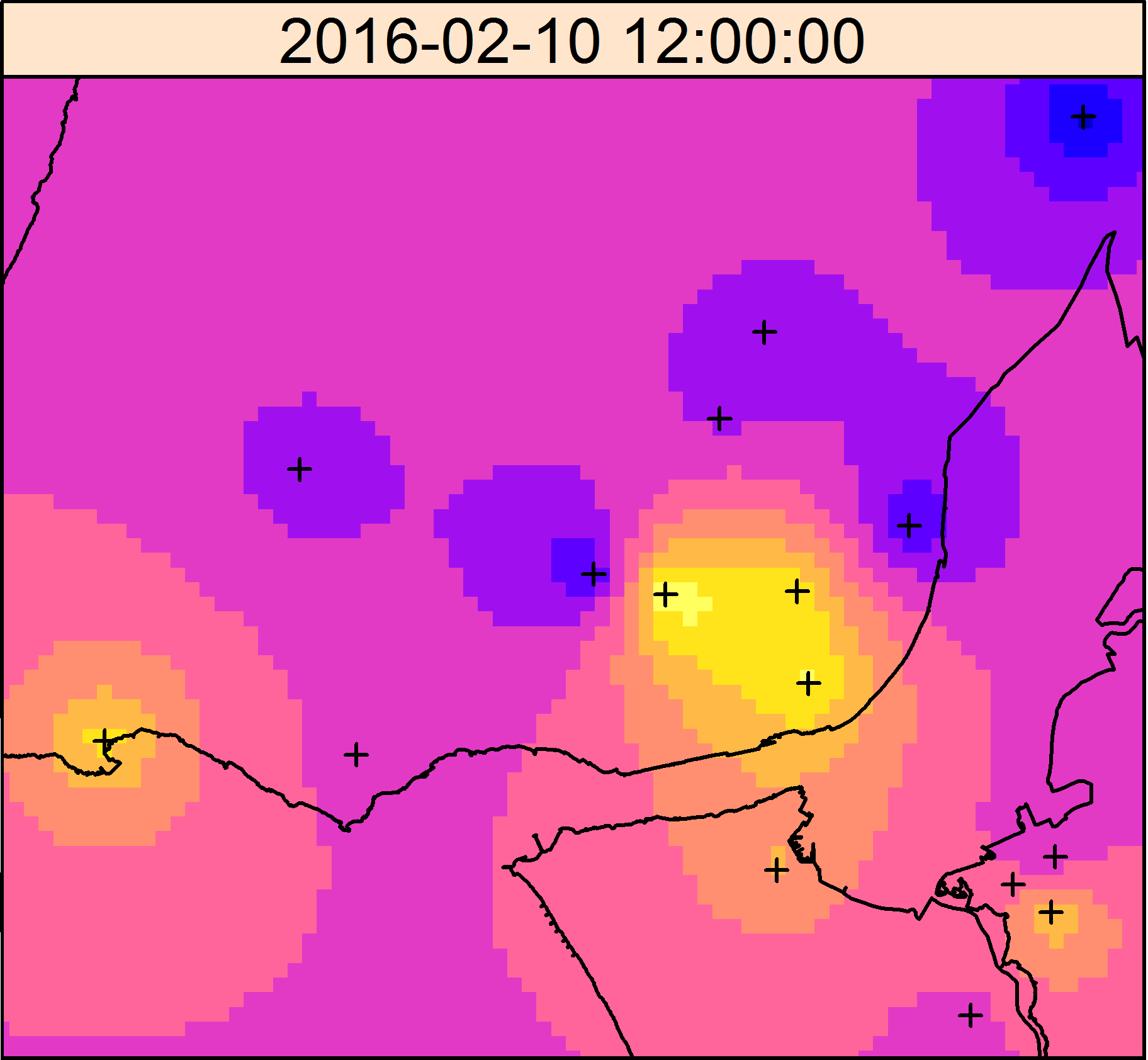
His research focuses on applying spatial statistics for environmental modeling and public health data, with particular expertise in disease mapping and establishing linkages between environmental exposures and health outcomes. Recently, he has been expanding his work to integrate satellite data to address climate change and environmental health challenges, leveraging advances in machine learning algorithms and spatiotemporal geostatistics.
Throughout his career, he has published in international peer-reviewed journals and developed spatial data methods and tools for applications including air pollution and health, optimization of pesticide applications for soil protection, detection of spatiotemporal disease patterns, and data visualization. His work has contributed to public health research recognized with the Francisco George Public Health Award (2022) from the Portuguese Ministry of Health and his teaching has been recognized with Teaching Excellence Awards (2022/2023, 2024/2025).
Research
Manuel Ribeiro’s research addresses fundamental gaps in environmental exposure assessment and disease mapping through the design of spatial data frameworks that reveal complex patterns in environmental and health data across space and time. Over the years, the research has been shaped to ensure its outputs provide actionable value for evidence-based policymaking.
Exposure assessment
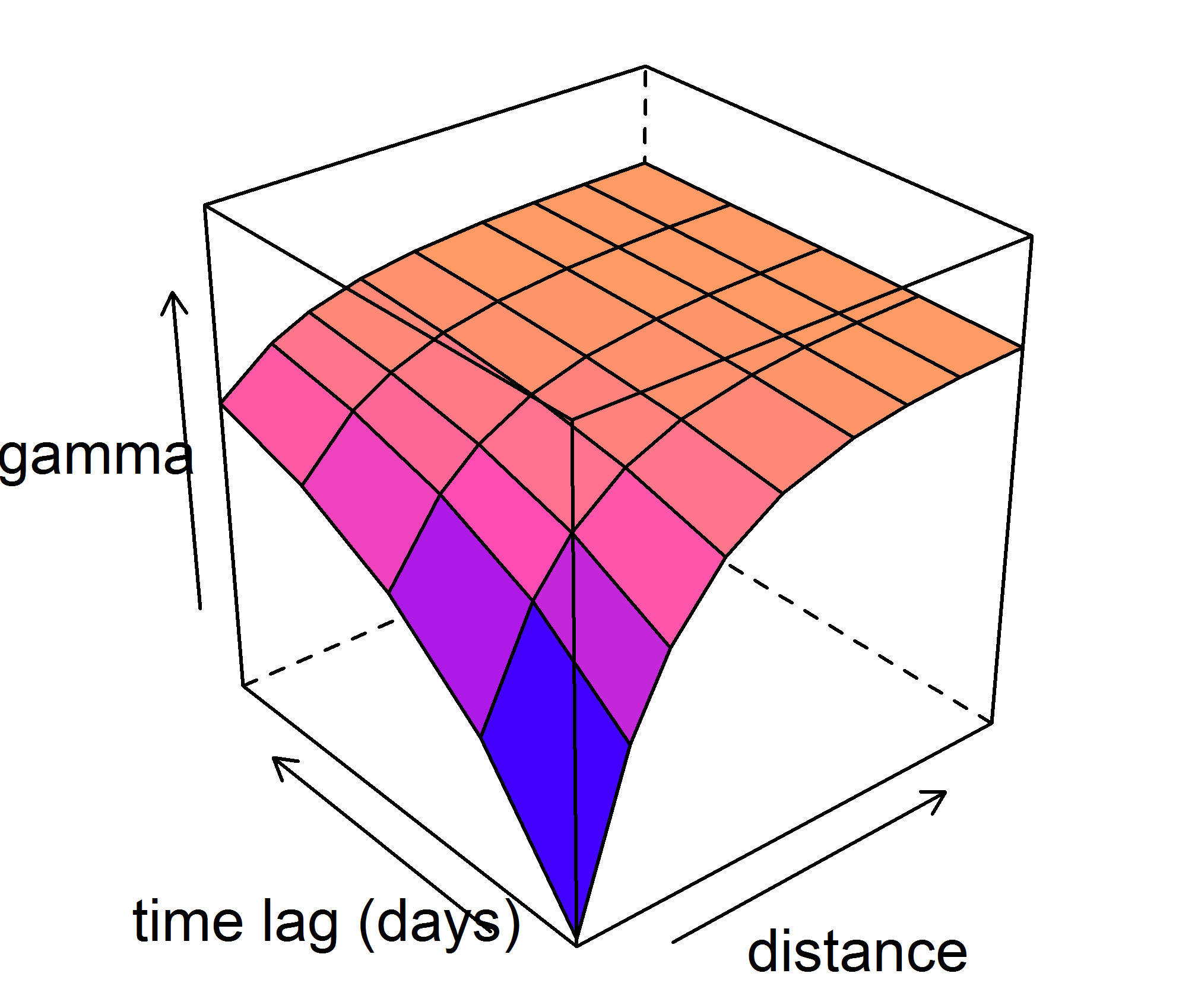
His early collaborative work on assessment of exposure to air pollution underlines the importance of considering the role of uncertainty in spatial analysis and environmental health modelling. Recognizing the increasing role of machine learning in environmental modelling he investigated how novel spatially-aware machine learning algorithms can contribute to improve the accuracy of air pollution exposure models.
More recently, he has used data from the Copernicus Atmosphere Monitoring Service (CAMS) for assessment of spatiotemporal air pollutant patterns and showed that unsupervised learning algorithms and spatial models can provide meaningful information about the main patterns underlying air pollutant exceedances.
Disease mapping
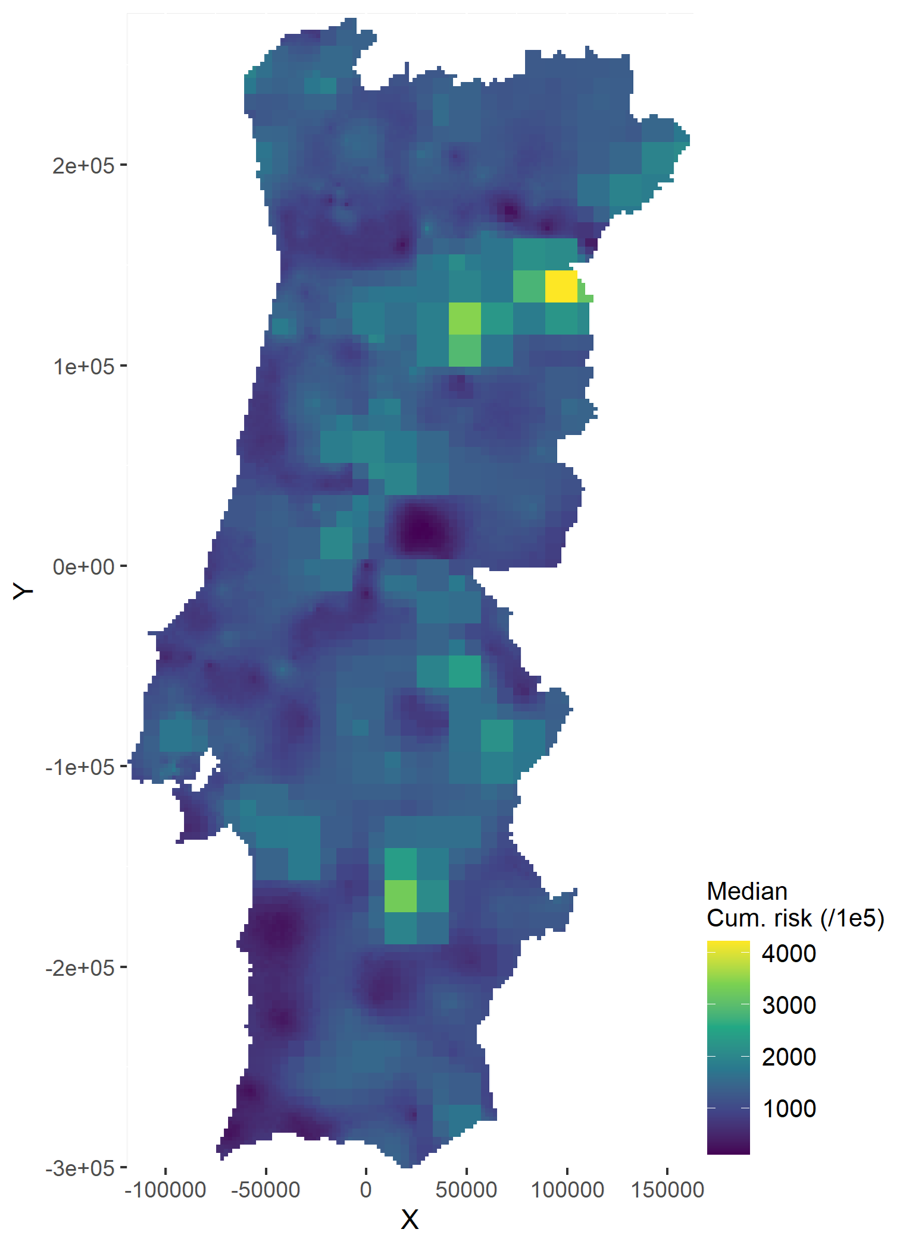
With the emergence of the COVID-19 pandemic, he has engaged in collaborative research to design, develop, and apply new spatial modelling tools that enable public health authorities to make more informed decisions and adjust communication strategies accordingly.
Ignoring spatial uncertainty can be misleading when evaluating disease risk maps. With a group of researchers from CERENA lab, he implemented a novel geostatistical model to accurately map the risk of disease and associated spatial uncertainty. This work was published and was the journal’s most downloaded article in 2020. Extending these ideas, he later developed EpiGeostats, an R package that integrates the models to deliver a single map summarizing disease risk and spatial uncertainty.
More recent work as focused on a novel approach integrating functional data with unsupervised learning and geostatistics for the detection of spatiotemporal disease patterns. The work showed innovative and straightforward solutions to characterize the major spatiotemporal disease incidence patterns.
Informing policymaking
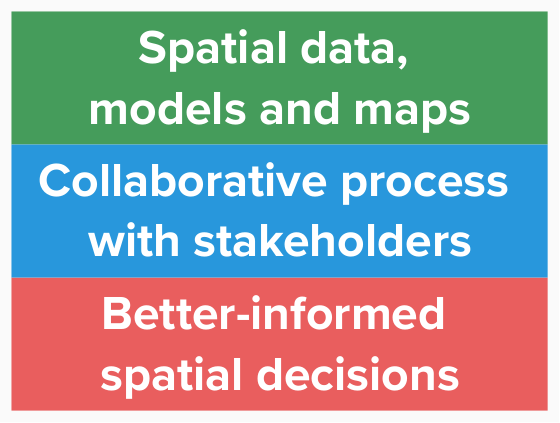
A key aspect about his work done in spatial data models and frameworks is to ensure that their outputs are value-driven and useful for policymaking. Recent Manuel Ribeiro’s work with colleagues from the Systems Engineering and Management research group used collaborative processes to investigate spatial models relevant to support well-informed policy response in pandemic contexts.
Publications
Lobarinhas, R., Paneiro, G., Dionísio, A., Ribeiro, M., & Cardell, C. (2026). Impact of thermal exposure on the surface properties of carbonate stones masonry. Bulletin of Engineering Geology and the Environment, 85(1), 22. https://doi.org/10.1007/s10064-025-04680-7
Ribeiro, M., Rodrigues, T., Roquette, R., Azevedo, L., Pereira, M. J., Dias, C. M., Bana e Costa, C. A., & Oliveira, M. D. (2026). A framework for collaborative identification of geographical information for map-based dashboards to support pandemic response policy-making. Cartography and Geographic Information Science, 1–16. https://doi.org/10.1080/15230406.2025.2600480
Pinto de Carvalho, C., Ribeiro, M., Godinho Simões, D., Pita Ferreira, P., Azevedo, L., Gonçalves-Sá, J., Mesquita, S., Gonçalves, L., Pinto Leite, P., & Peralta-Santos, A. (2024). Spatial Analysis of Determinants of COVID-19 Vaccine Hesitancy in Portugal. Vaccines, 12(2), 119. https://doi.org/10.3390/vaccines12020119
Ribeiro, M., Azevedo, L., Santos, A. P., Pinto Leite, P., & Pereira, M. J. (2024). Understanding spatiotemporal patterns of COVID-19 incidence in Portugal: A functional data analysis from August 2020 to March 2022. PLOS ONE, 19(2), e0297772. https://doi.org/10.1371/journal.pone.0297772
Duarte, I., Ribeiro, M., Pereira, M. J., Leite, P. P., Peralta-Santos, A., & Azevedo, L. (2023). Spatiotemporal evolution of COVID-19 in Portugal’s Mainland with self-organizing maps. International Journal of Health Geographics, 22(1). https://doi.org/10.1186/s12942-022-00322-3
Rodríguez-Lizana, A., Ramos, A., Pereira, M. J., Soares, A., & Ribeiro, M. (2023). Assessment of the Spatial Variability and Uncertainty of Shreddable Pruning Biomass in an Olive Grove Based on Canopy Volume and Tree Projected Area. Agronomy, 13(7). https://doi.org/10.3390/agronomy13071697
Ribeiro, M., Azevedo, L., & Pereira, M. J. (2023). EpiGeostats: An R Package to Facilitate Visualization of Geostatistical Disease Risk Maps. Mathematical Geosciences. https://doi.org/10.1007/s11004-023-10080-y
Ignatenko, E., Ribeiro, M., & Oliveira, M. D. (2022). Informing the Design of Data Visualization Tools to Monitor the COVID-19 Pandemic in Portugal: A Web-Delphi Participatory Approach. International Journal of Environmental Research and Public Health, 19. https://doi.org/10.3390/ijerph191711012
Ribeiro, M. (2022). Air pollution models in epidemiologic studies with geostatistics and machine learning. ArXiv, 2211.09516([stat.AP]). https://doi.org/10.48550/arXiv.2211.09516
Ngowo, R. G., Ribeiro, M., & Pereira, M. J. (2021). Quantifying 28-year (1991–2019) shoreline change trends along the Mnazi Bay – Ruvuma Estuary Marine Park, Tanzania. Remote Sensing Applications: Society and Environment, 23(May). https://doi.org/10.1016/j.rsase.2021.100607
Rodríguez-Lizana, A., Pereira, M. J., Ribeiro, M., Soares, A., Azevedo, L., Miranda-Fuentes, A., & Llorens, J. (2021). Spatially variable pesticide application in olive groves: Evaluation of potential pesticide-savings through stochastic spatial simulation algorithms. Science of the Total Environment, 778. https://doi.org/10.1016/j.scitotenv.2021.146111
Aguiar, J., Ribeiro, M., Pedro, A. R., Martins, A. P., & da Costa, F. A. (2020). Awareness about barriers to medication adherence in cardiovascular patients and strategies used in clinical practice by Portuguese clinicians: a nationwide study. International Journal of Clinical Pharmacy. https://doi.org/10.1007/s11096-020-01174-2
Azevedo, L., Pereira, M. J., Ribeiro, M., & Soares, A. (2020). Geostatistical COVID-19 infection risk maps for Portugal. International Journal of Health Geographics, 19(1), 1–8. https://doi.org/10.1186/s12942-020-00221-5
Ribeiro, M., & Pereira, M.J. (2018). Modelling local uncertainty in relations between birth weight and air quality within an urban area: combining geographically weighted regression with geostatistical simulation. Environmental Science and Pollution Research, 25(26), 25942–54. https://doi.org/10.1007/s11356-018-2614-x
Llop, E., Pinho, P., Ribeiro, M., Pereira, M. J., & Branquinho, C. (2017). Traffic represents the main source of pollution in small Mediterranean urban areas as seen by lichen functional groups. Environmental Science and Pollution Research. https://doi.org/10.1007/s11356-017-8598-0
Rodríguez-Lizana, A., Pereira, M. J., Ribeiro, M., Soares, A., Márquez-García, F., Ramos, A., & Gil-Ribes, J. (2017). Assessing Local Uncertainty of Soil Protection in an Olive Grove Area with Pruning Residues Cover: A Geostatistical Cosimulation Approach. Land Degradation and Development, 28(7). https://doi.org/10.1002/ldr.2734
Ribeiro, M., Sousa, A. J., & Pereira, M. J. (2016). A coregionalization model can assist specification of Geographically Weighted Poisson Regression: Application to an ecological study. Spatial and Spatio-Temporal Epidemiology, 17, 1–13. https://doi.org/10.1016/j.sste.2016.02.001
Ribeiro, M., Pinho, P., Llop, E., Branquinho, C., & Pereira, M. J. (2016). Geostatistical uncertainty of assessing air quality using high-spatial-resolution lichen data: A health study in the urban area of Sines, Portugal. Science of the Total Environment, 562, 740–750. https://doi.org/10.1016/j.scitotenv.2016.04.081
da Costa, F. A., Ribeiro, M., Braga, S., Carvalho, E., Francisco, F., Miranda, A. C., Moreira, A., & Fallowfield, L. (2016). Sexual dysfunction in breast cancer survivors: Cross-cultural adaptation of the sexual activity questionnaire for use in Portugal. Acta Medica Portuguesa, 29(9), 553–541. https://doi.org/10.20344/amp.7389
Ribeiro, M., Pinho, P., Llop, E., Branquinho, C., Soares, A., & Pereira, M. J. (2014). Associations between outdoor air quality and birth weight: a geostatistical sequential simulation approach in Coastal Alentejo, Portugal. Stochastic Environmental Research and Risk Assessment, (28), 527–540. https://doi.org/10.1007/s00477-013-0770-6
Pinho, P., Llop, E., Ribeiro, M., Cruz, C., Soares, A., Pereira, M. J. J., & Branquinho, C. (2014). Tools for determining critical levels of atmospheric ammonia under the influence of multiple disturbances. Environmental Pollution, 188, 88–93. https://doi.org/10.1016/j.envpol.2014.01.024
Ribeiro, M., Pinho, P., Llop, E., Branquinho, C., Sousa, A. J., & Pereira, M. J. (2013). Multivariate geostatistical methods for analysis of relationships between ecological indicators and environmental factors at multiple spatial scales. Ecological Indicators, 29, 339–347. https://doi.org/10.1016/j.ecolind.2013.01.011
Limbert, E., Prazeres, S., São Pedro, M., Madureira, D., Miranda, A., Ribeiro, M., Carrilho, F., Jácome de Castro, J., Santana Lopes, M., Cardoso, J., Carvalho, A., João Oliveira, M., Reguengo, H., Borges, F., Campo, B., Cavaco, B., Veiga Lopes, C., Freitas Horta, C., Passos, D., … Leite, V. (2012). Iodine intake in Portuguese school children. Acta Medica Portuguesa, 25(1).
Ribeiro, M., Llop, E., Branquinho, C., Dias, C. M., Tavares, A. B., Santos, F., Soares, A., & Pereira, M. J. (2012). A retrospective cohort study to assess the association between outdoor air quality and low birth weight. Archives of Disease in Childhood, 97(Suppl 2), A283–A283. https://doi.org/10.1136/archdischild-2012-302724.0990
Passos-Coelho, J. L., Ribeiro, M., Santos, E., Sousa Pontes, C., Brito, B., & Miranda, A. C. (2011). Suboptimal survival of male germ-cell tumors in southern Portugal-a population-based retrospective study for cases diagnosed in 1999 and 2000. Annals of Oncology, 22(5), 1215–1220. https://doi.org/10.1093/annonc/mdq551
Passos-Coelho, J.L., Esteves, S., Vieira, P. A., Isidoro, M., Ribeiro, M., Oliveira, J., & Moreira, A. R. (2011). Adjuvant chemotherapy with TAC (docetaxel, doxorubicin, and cyclophosphamide) in patients with breast cancer - Incidence of neutropenic fever outside clinical trials. Breast Journal, 17(5). https://doi.org/10.1111/j.1524-4741.2011.01140.x
Limbert, E., Prazeres, S., São Pedro, M., Madureira, D., Miranda, A., Ribeiro, M., De Castro, J. J., Carrilho, F., Oliveira, M. J., Reguengo, H., & Borges, F. (2010). Iodine intake in Portuguese pregnant women: Results of a countrywide study. European Journal of Endocrinology, 163(4). https://doi.org/10.1530/EJE-10-0449
Ribeiro, M., Pereira, M. J., Soares, A., Branquinho, C., Augusto, S., Llop, E., Fonseca, S., Nave, J. G., Tavares, A. B., Dias, C. M., Silva, A., Selemane, I., De Toro, J., Santos, M. J., & Santos, F. (2010). A study protocol to evaluate the relationship between outdoor air pollution and pregnancy outcomes. BMC Public Health, 10(613). https://doi.org/10.1186/1471-2458-10-613
Marques, A. R., Teixeira, E., Diamond, J., Correia, H., Santos, S., Neto, L.,Ribeiro, M., Miranda, A., & Passos-Coelho, J. L. (2009). Detection of human mammaglobin mRNA in serial peripheral blood samples from patients with non-metastatic breast cancer is not predictive of disease recurrence. Breast Cancer Research and Treatment, 114(2). https://doi.org/10.1007/s10549-008-0002-9
Teaching
Last updated: 2026-07-09