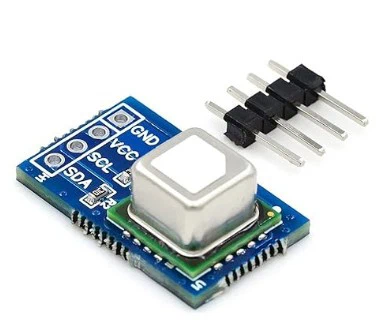
The integration of the SCD41 sensor by Sensirion is essential to our project, as it uses photoacoustic spectroscopy to measure actual CO₂ concentration—unlike low-cost sensors that only provide estimated values (eCO₂).
In many environments, monitoring real CO₂ levels is a critical indicator of human occupancy and ventilation efficiency, with concentrations above 1000 ppm directly linked to reduced concentration and increased drowsiness. The SCD41 was chosen for its high accuracy and its Single Shot mode, which enables quick measurements followed by deep sleep, maximizing the system’s energy efficiency.
Although our project already includes the Bosch BME690, the presence of the SCD41 is indispensable, as both sensors monitor different types of pollutants. The SCD41 focuses on the biological impact of human respiration (CO₂), while the BME690 provides estimates of VOCs (Volatile Organic Compounds), such as those emitted by disinfectants, paints, and chemical solvents.
This combined approach allows our prototype to distinguish between air that is stale due to poor ventilation and air that is contaminated by external chemical agents, ensuring a more complete and accurate assessment of indoor air quality across different environments.