Week 13
Prototype Almost Complete!
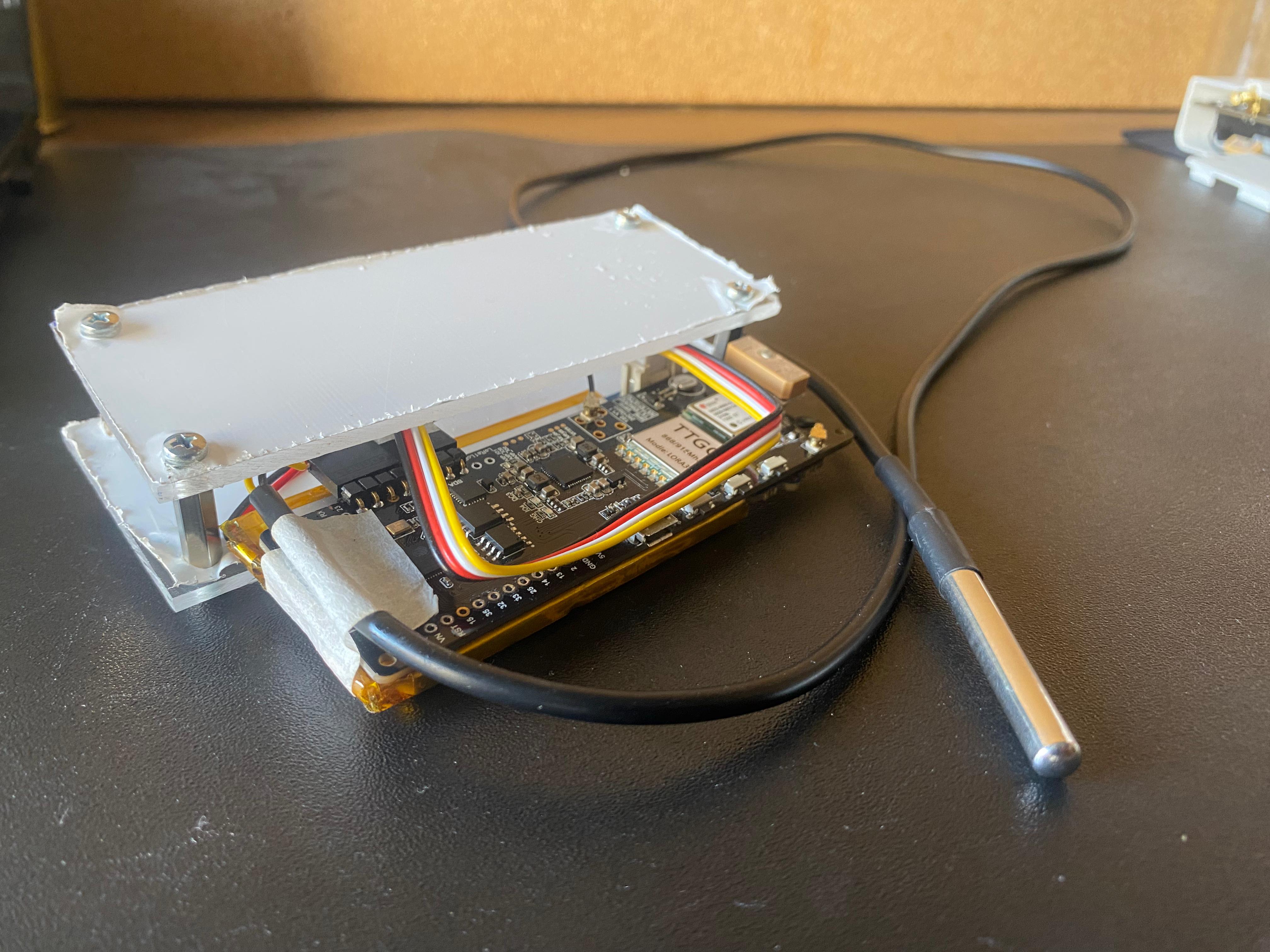
This week, we were able to integrate the elements into a single working system, with the valuable support of our scientific advisor Pedro Vítor. With the integrated system in place, we began our battery of tests to evaluate the performance of our prototype.
LoRa Communication System Testing Summary
Objectives
Primary Objective:
Assess data consistency over LoRa communication, focusing on packet loss detection.
Secondary Objective:
Evaluate the effective communication range between devices, analysing how distance impacts data transmission and reception reliability.
Methodology
Test Setup:
- Devices configured to transmit data packets at fixed intervals.
- Distances varied from 50 metres to 1000 metres.
- Testing conducted in an open outdoor environment to minimise interference.
Scenarios Tested:
- Line-of-Sight (LOS) - Direct visibility between transmitter and receiver.
- Non-Line-of-Sight (NLOS) - Obstacles such as buildings and dense vegetation between devices.
Test Procedure:
- At each distance, a large number of packets were transmitted to ensure statistical relevance.
- Packet delivery success rates were recorded at each distance.
- Both signal strength and reliability were monitored.
Results
Up to 500 metres:
  - Success rate: Approximately 98%
  - Minimal packet loss observed.
Beyond 500 metres:
  - Gradual decrease in success rate, although communication remained reliable.
  - Increased susceptibility to packet loss due to signal attenuation.
Environmental Impact:
LOS conditions:  - Very high success rates maintained even at extended distances.
NLOS conditions: - More significant packet loss, particularly with large obstructions (e.g. buildings, dense trees).
Conclusions
1.Highly reliable within 500 metres.
2.Operationally effective even beyond 500 metres, although performance degrades with distance.
3.Sensitive to environmental factors, especially in NLOS scenarios.
Temperature Sensor
Objectives
Primary Objective:
Assess the accuracy and responsiveness of the temperature sensor under varying environmental conditions.
Methodology
Sensor Description:
- Measures ambient temperature at fixed intervals.
Test Setup:
- Gradual and rapid temperature changes simulated using controlled heat and cooling sources.
- Repeated measurements to verify stability and response time.
Results
- Accurate readings: Within ±0.5°C of reference measurements.
- Responsive to rapid changes: Quick adaptation to varying temperatures.
Conclusion
The temperature sensor provides accurate and responsive environmental monitoring.
Bluetooth Signal Sensor
Objectives
Primary Objective:
Evaluate the performance of the Bluetooth signal sensor in detecting nearby devices and logging proximity data accurately.
Methodology
Sensor Description:
- Detects Bluetooth-enabled devices and records signal strength.
Test Setup:
- Varying the distance and number of Bluetooth devices.
- Introducing interference scenarios with multiple signal sources.
Results
- Effective detection range: Reliable up to approximately 10 metres.
- Accurate proximity logging: Successfully detected multiple devices with minimal signal interference.
Conclusion
The Bluetooth sensor is effective for proximity detection and device identification in various environments.