Third Week - Website Development



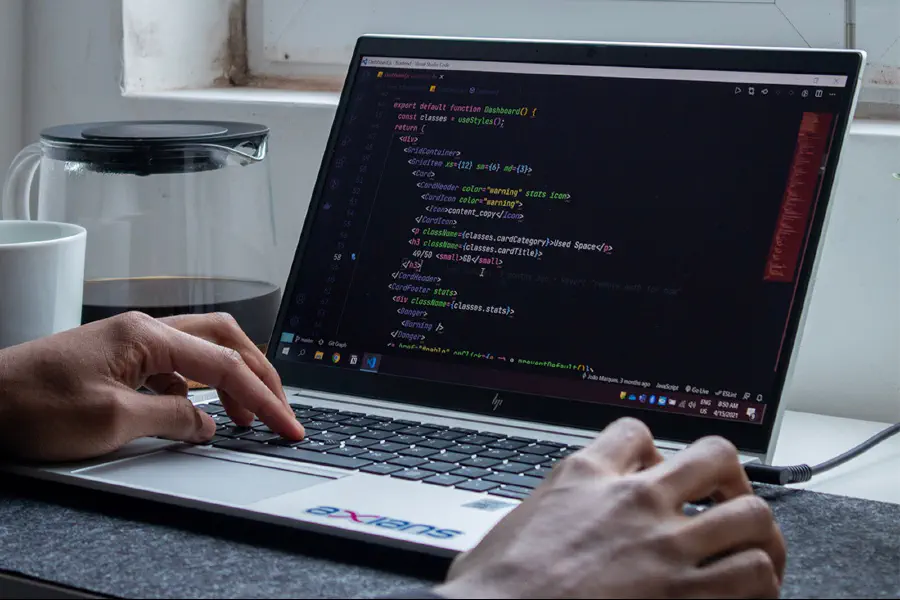
Table of Contents
Introduction
This week, we shifted our focus from research and problem definition to hands-on development, taking the first steps in building our website. To achieve this, we worked with Hugo, a static site generator, and quickly realized that mastering it would require a deep dive into its structure and functionalities.
We started by learning how to install and configure the software, exploring different templates, and understanding how to modify key files—including .html, .scss, markdown, and JavaScript—to personalize our chosen theme. Our goal was to make the site not only visually appealing but also well-structured and easy to navigate.
Throughout this process, we faced several technical challenges, from debugging layout issues to ensuring the site functioned smoothly across different devices. Alongside web development, we also edited a YouTube video to help visually present our project and took care of the logistics needed to host the website on a custom domain provided by Técnico. This included configuring the server, uploading files, and ensuring everything was correctly set up for public access.
Despite these technical efforts, we didn’t lose sight of our core mission: refining our understanding of the problem we are solving.
Just like in previous weeks, we continued conducting interviews with professionals who work directly with elderly care. Although scheduling in-person meetings proved challenging, we successfully established phone connections with several key organizations.
Even though we had already moved away from the idea of supporting formal caregivers managing multiple seniors, we saw value in interviewing institutions that provide such services. Their experiences offered an expanded perspective on the challenges of elderly care, reinforcing the conclusions we had drawn from previous discussions.
The goal of these interviews was clear: to deepen our understanding of the daily struggles faced by caregivers and home care organizations, identifying the most urgent needs and potential gaps that a technological solution could fill. The more perspectives we gathered, the better we could refine our approach.
Our Website
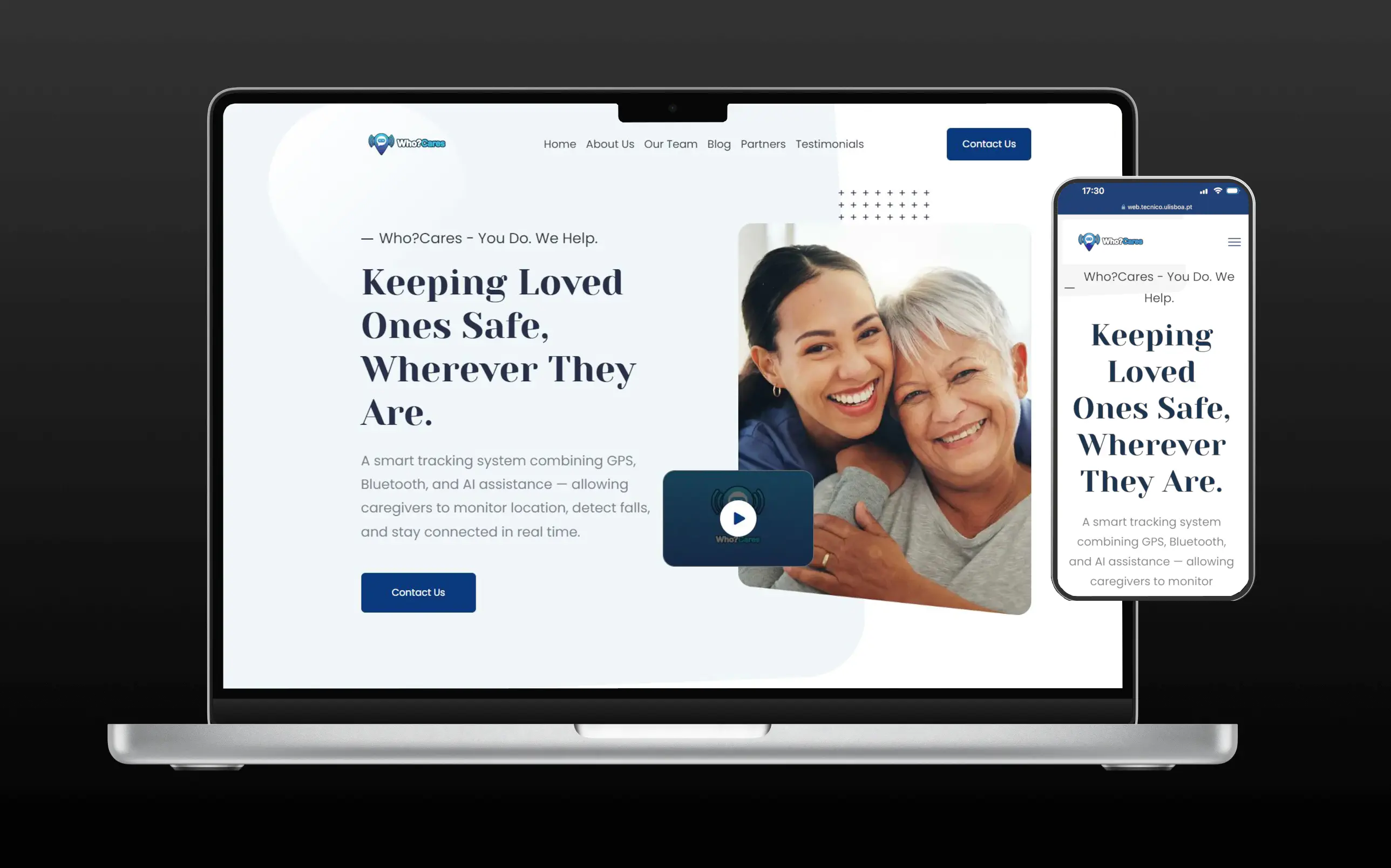
As our project evolved, we began designing our website as a space where we could not share our progress and ideas to other people like potential collaborators, caregivers, and institutions who might benefit from our solution. With this in mind, we designed a clean, well-structured website that effectively communicates our mission.
At the heart of our website is a catchy landing page — a visually appealing, easy-to-read introduction that conveys the essence of our project in just a few seconds. Landing pages serve as entry points for visitors arriving from search engines, social media, or external campaigns, and they should immediately capture attention and encourage action. In our case, we wanted to ensure that anyone visiting our site could quickly grasp why our solution matters and how they could engage with our work.
Beyond the landing page, we structured the site into several key sections:
-
About Us – A clear breakdown of the problem we are addressing and the innovative solution we propose. This section helps contextualize the issue and explains why our approach is different.
-
Our Team – A space to introduce the people behind the project, highlighting our roles in this project and shared commitment to improving elderly care.
-
Blog – A dedicated section where we document our weekly progress, sharing key insights, milestones, and reflections. This transparency allows others to follow our journey and engage with our work.
-
Partners – As we continue developing the project, we aim to collaborate with various institutions and organizations that share our mission. This section is designed to showcase those partnerships.
-
Testimonials – A collection of feedback and insights from caregivers, professionals, and individuals who have shared their experiences with us, reinforcing the real-world need for our solution.
-
Contact Us – A section where visitors can find our contact details to reach out with questions, collaboration proposals, or general inquiries. We believe that direct communication will be crucial in refining and expanding our project.
-
Resources & Project Files – In line with our commitment to openness, we created a page where people can access some of our project files and ongoing work. This ensures transparency and invites constructive feedback.
Developing this website was not just about building an online platform — it was about creating a hub for our project, a space where we could share our progress, engage with our audience, and refine our solution based on real-world needs. As we continue moving forward, we’ll keep updating and improving it, ensuring it remains a valuable resource for both our team and the broader community.
People and Associations We Spoke With
Interview with a Social Worker from a Home Care Service
(Hugo Soares conducted this interview)
One of the main challenges highlighted in our discussion with Triplo Cuidado was the lack of continuous supervision for elderly individuals living alone. Caregivers visit at specific times, but between those visits, seniors remain unsupervised for long periods—leaving them vulnerable to falls, confusion, and wandering episodes. Often, these incidents go unnoticed for hours, causing distress for both families and professionals.
Additionally, they noted that some elderly individuals have a tendency to leave home without warning, which increases the risk of accidents or getting lost. These insights reinforced the importance of real-time monitoring and proactive alerts, rather than solutions that only provide information after an incident has already occurred.
Interview with a Representative from an Alzheimer’s Association
(Rodrigo Gonçalves conducted this interview)
Speaking with this association further emphasized the scale of this issue. Today, over 512,000 seniors live alone in Portugal, and an estimated 322,000 of them have some form of dementia. This greatly increases the risk of unnoticed accidents, particularly falls — which account for 68% of all domestic and leisure-related accidents involving the elderly.
The association also highlighted that most of these seniors rely on informal caregivers, such as family members or neighbors, who lack the resources to provide round-the-clock supervision. As a result, there is a growing need for remote monitoring solutions that can offer peace of mind to caregivers while reducing the risks associated with living alone.
An interesting point raised was the potential for a scalable solution — one that could not only support individual caregivers but also be adopted by organizations providing elderly care services, maximizing its impact.
Interview with a Social Worker from a Home Care Organization
(Rodrigo Gonçalves conducted this interview)
In our conversation with this organization, the discussion centered around staff shortages and their impact on elderly supervision. Despite daily visits, caregivers struggle to detect emergencies in real time, whether it be falls, sudden health changes, or wandering episodes.
A major challenge they face is communication with seniors who have cognitive impairments. Many struggle to express discomfort or pain, making it difficult for caregivers to assess their well-being between visits. This highlighted the importance of a monitoring system that could provide real-time health and location updates, bridging the gap between scheduled visits and ensuring seniors are safe at all times.
Interview with a Social Worker from a Home Care Service
(Rodrigo Gonçalves conducted this interview)
Finally, our discussion with this association focused on the accessibility and usability of technological solutions. They noted that while many elderly monitoring tools exist, they are often too complex or expensive, making them impractical for daily use.
A key concern was the early detection of falls, especially silent falls that go unnoticed for long periods. Additionally, the team shared cases of seniors wandering away from home without caregivers noticing — a critical safety issue, especially for those in the early stages of dementia.
To be truly effective, they stressed that any solution must be:
- Intuitive — Easy to use for both seniors and caregivers.
- Affordable — Financially accessible to those who need it most.
- Reliable — Providing real-time alerts to ensure prompt response to emergencies.
Week Recap
This week marked an important transition in our project. On one hand, we took our first real steps toward building our website and technical infrastructure, overcoming challenges in web development and content creation. On the other hand, we deepened our research, validating previous insights and expanding our understanding of the real-world difficulties caregivers face.
The interviews reaffirmed a core principle: our solution needs to go beyond simple tracking. Caregivers don’t just need to know where someone is—they need proactive alerts, real-time insights, and an intuitive interface that makes their lives easier.
We also confirmed that while technology exists, there is a gap between what is available and what is truly practical for caregivers and seniors. Many existing solutions are either too complicated or too expensive, making accessibility a major barrier.
With these findings in mind, our next step is to refine our system’s core functionalities and begin planning the technical implementation. Our focus now shifts toward finalizing system design & defining key components while ensuring accessibility & user-friendliness.
As we move forward, we feel more confident than ever in our direction. This week’s insights have solidified our understanding of the problem, and we are ready to start shaping a solution that truly makes a difference.