INESC-ID · Instituto Superior Técnico · Universidade de Lisboa

Emanuel
Gonçalves

Assistant Professor Integrated Researcher ELLIS Scholar

Leading the Quantitative Biology Group — computational approaches to decode how cancer cells respond, adapt, and resist treatment.

Machine Learning/ Multi-omics/ Functional Genomics/ Drug Resistance/ Cancer
Emanuel Gonçalves portrait
Lisbon · 2026
§ 01 — Statement

A research
mission.

Our group develops computational approaches to analyse high-throughput drug and genetic screens alongside multi-omics data, with the goal of uncovering the regulatory mechanisms that drive how cancer cells respond to treatment.

Working closely with experimental and clinical collaborators, we build integrative methods to tackle one of oncology's most pressing challenges — drug resistance — while training a new generation of engineers at the intersection of computer science, cell biology, and biomedicine.

§ 02 — Research Directions
01 / Functional Genomics

CRISPR screens at scale — from knockout to variant resolution

Designing and analysing genome-wide CRISPR screens — spanning loss-of-function knockouts, base editing and saturation mutagenesis — to map cancer vulnerabilities and resolve the functional consequences of genetic variation across hundreds of cell models.

02 / Multi-omics & ML

Integrative models of cancer state

Classical and deep generative methods — including variational autoencoders — for integrating genomics, transcriptomics, proteomics, and drug response into unified representations that reveal biologically meaningful structure.

03 / Dependency Maps

Toward a clinically informed Cancer DepMap

Building and expanding the Cancer Dependency Map: prioritising therapeutic targets, benchmarking biomarkers of response, and extending these maps with synthetic data to cover under-represented cancer contexts.

04 / Clinical AI

From molecules to the clinic

Partnering with hospitals and registries to bring AI to real-world oncology — extracting structured knowledge from unstructured electronic health records and developing diagnostic and prognostic tools for precision medicine.

§ 03 — Selected Publications
2026
Genetic interactions, synthetic lethality and complexity in cancer vulnerability mapping — 2nd EuroDepMap symposium
Proietti L. et al. · Symposium report
FEBS Letters
2025
A next-generation dual guide CRISPR system for genetic interaction library screening
Burgold T. et al. · Combinatorial CRISPR screens
Nature Communications
2025
A technical review of multi-omics data integration methods — from classical statistical to deep generative approaches
Review · Baião A. R. et al.
Briefings in Bioinformatics
2025
The synthetic lethal interaction between CDS1 and CDS2 is a vulnerability in uveal melanoma and across multiple tumour types
Chan P. Y. et al. · CDS1/CDS2 axis as a pan-cancer target
Nature Genetics
2024
Synthetic augmentation of cancer cell line multi-omic datasets using unsupervised deep learning
MOSA · first synthetic Cancer DepMap via deep generative models
Nature Communications
2024
A comprehensive, clinically informed map of dependencies in cancer cells and a framework for target prioritisation
Cancer DepMap 2.0 · 930 cancer cell lines
Cancer Cell
2023
Base-editing screens map mutations affecting interferon-γ signalling in cancer
High-resolution functional impact of variants
Cancer Cell
2022
A suspension technique for efficient large-scale cancer organoid culturing and perturbation screens
Enabling high-throughput functional genomics in organoids
Scientific Reports
2021
MinLibCas9 — a minimal genome-wide human CRISPR-Cas9 library
Data-driven in-silico library design
Genome Biology
2020
Drug mechanism-of-action discovery through the integration of pharmacological and CRISPR screens
Sanger × Broad joint analysis of 397 drugs across 484 cell lines
Molecular Systems Biology
2019
Prioritisation of cancer therapeutic targets using CRISPR–Cas9 screens
One of the largest CRISPR-Cas9 screens to date · WRN as a target
Nature
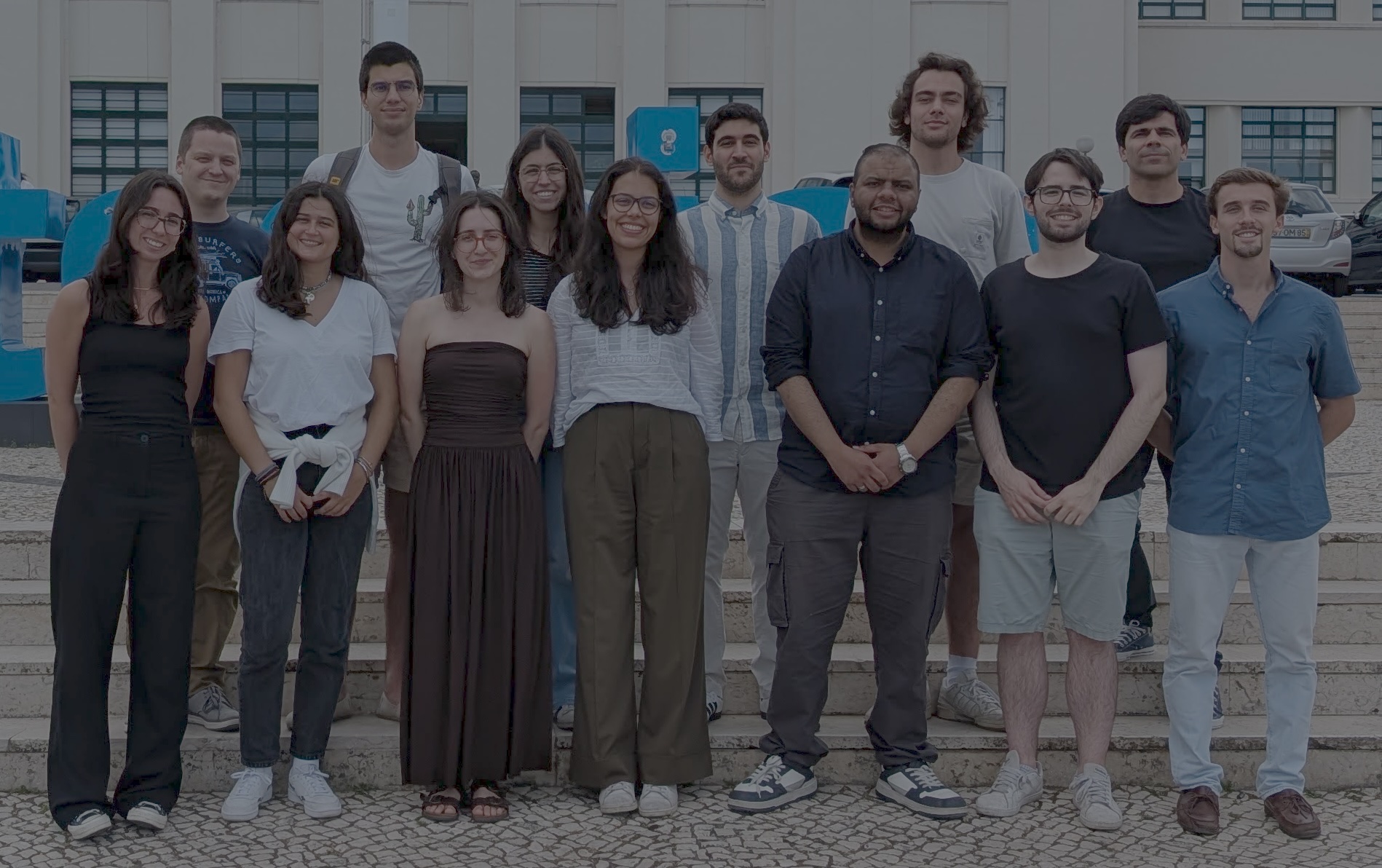
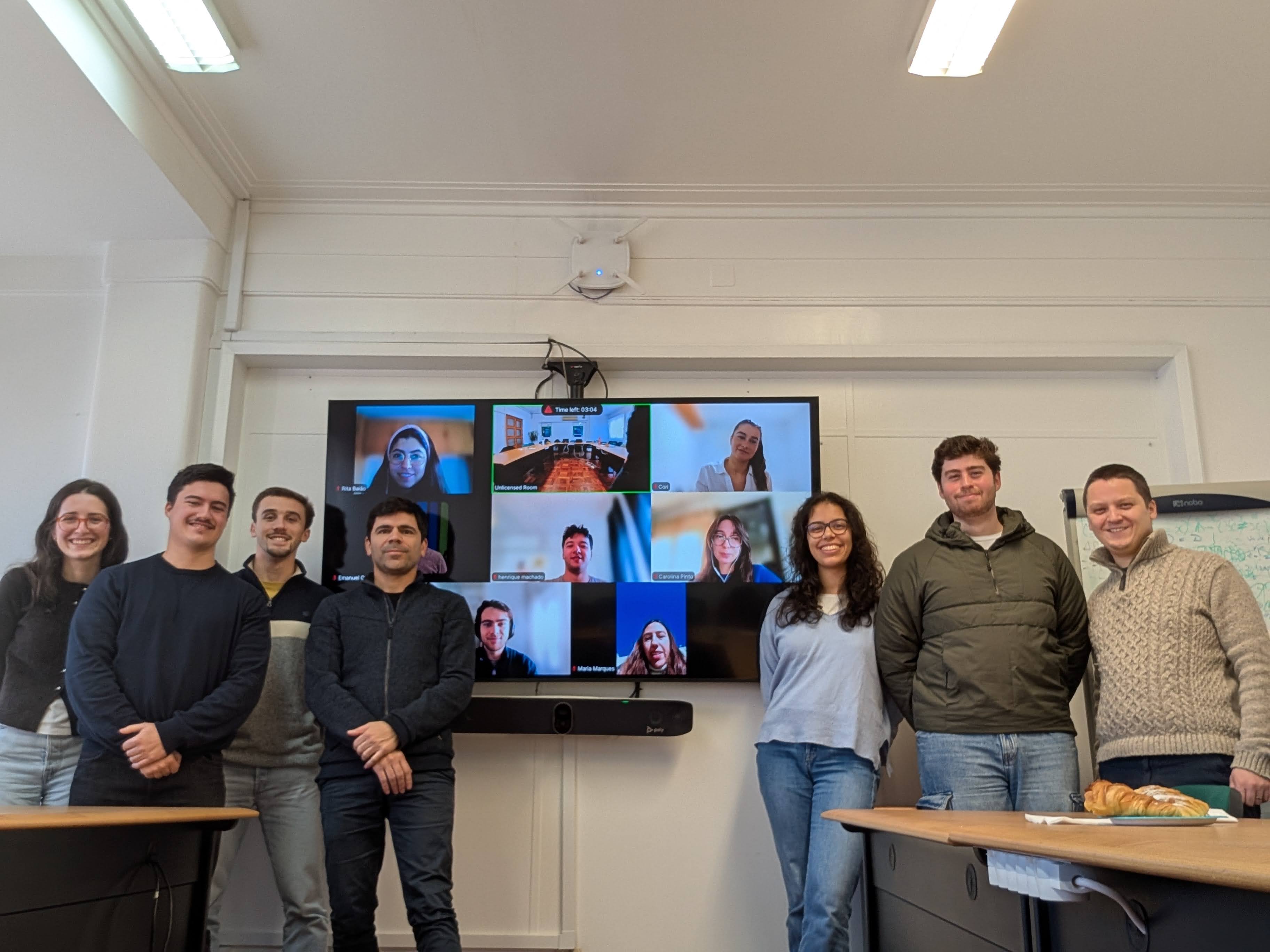
§ 04 — Team
Leadership
Emanuel Gonçalves

Emanuel Gonçalves, Ph.D.

Assistant Professor · Principal Investigator

Assistant Professor at Instituto Superior Técnico and Integrated Researcher at INESC-ID. PhD in Systems Biology (Cambridge / EMBL-EBI, 2017). Former postdoctoral fellow at the Wellcome Sanger Institute and Fulbright Scholar at the Broad Institute of MIT and Harvard.

PhD Students
Ana Rita Baião
Mohamed Emam visiting
Rodrigo Samico
Data Scientists
Corinne McFarlane
Maria Galhardas
Rita Gama
MSc Students
Carolina Pinto
Francisca Marques
Henrique Machado
José Mendes
Mariana Lamy Nunes
Miguel Dinis
Vasco Paisana
BSc Students
Gabriel Duarte
§ 05 — Alumni
André Godinho
MSc Bioinformatics · DTU
André Morgado
MSc alumnus
Diogo Ferreira
MSc alumnus
Gonçalo Gonçalves
MSc alumnus
Gonçalo Pinto
PhD · Helmholtz (Theis Group)
Inês Lucas
PhD · EMBL-EBI (Birney Group)
Joana Correia
MSc alumna
Jorge Ribeiro
Software Engineer · Strypes PT
Leandro Sobral
MSc alumnus
Manuel Ravasqueira
PhD · Trinity College Dublin (Davey Group)
Marta Amaro
Bioinformatician · Champalimaud (Correia Group)
Miguel Caetano Nunes
MSc Biostatistics & Data Science · KTH
Miguel Sousa
Software Engineer · Daloop
Nelson Trindade
Software Engineer · Crossjoin Solutions
Raul Sakar
MSc alumnus
Sebastião Santos
MSc alumnus
Sofia Apolinário
Analytics & AI · PwC
§ 06 — News & Highlights
Feb · 2026

2nd EuroDepMap symposium report in FEBS Letters

Genetic interactions, synthetic lethality and complexity in cancer vulnerability mapping.

Publication
Dec · 2025

Next-generation dual guide CRISPR system in Nature Communications

A new dual guide CRISPR system for genetic interaction library screening.

Publication
Sep · 2025

Project INSIGHT-CF funded

Mechanistic insights into the differentiation of CF epithelia — Italian Cystic Fibrosis Research Foundation.

Grant
Sep · 2025

New review in Nature Reviews Drug Discovery

Synthetic lethality in cancer drug discovery — challenges and opportunities.

Publication
Aug · 2025

Multi-omics integration review out in Briefings in Bioinformatics

From classical statistical methods to modern deep generative models.

Publication
Jul · 2025

CDS1/CDS2 synthetic lethality in uveal melanoma published in Nature Genetics

A pan-cancer vulnerability identified through combinatorial CRISPR screens.

Publication
May · 2025

Project SYNTHESIS funded by FCT

Mosaic integration and synthetic generation of multi-omic data for precision cancer medicines.

Grant
May · 2025

MALDIBANK Horizon Europe project kicks off

Multi-domain open MALDI spectra bank for identification of microorganisms.

Grant
Feb · 2025

Project SARC-RON-AI funded

AI-driven integration of sarcoma clinical data for the Portuguese National Oncology Registry.

Grant
Dec · 2024

Accepted as ELLIS Scholar

Joining the ELLIS Lisbon Unit within the European Laboratory for Learning and Intelligent Systems.

Award
Nov · 2024

Synthetic Cancer DepMap published in Nature Communications

First synthetic Dependency Map generated with unsupervised deep learning.

Publication
May · 2024

Awarded a Fulbright Scholarship

Visiting the Broad Institute of MIT and Harvard — deep learning for combinatorial saturation mutagenesis screens.

Award
Jan · 2024

Cancer DepMap 2.0 out in Cancer Cell

Second-generation map of cancer dependencies across 930 cell lines.

Publication
Jan · 2023

Base-editing screens paper in Cancer Cell

Mapping mutations affecting interferon-gamma signalling.

Publication
§ 07 — Funded Projects
FCT · 2025 — 2028

SYNTHESIS

Mosaic integration and synthetic generation of multi-omic data for precision cancer medicines.

Despite remarkable progress in cancer precision medicine, drug resistance and low clinical success rates persist. SYNTHESIS builds synthetic and mosaic-integration frameworks to expand the scope of multi-omic discovery.

Partners · INESC-ID · Champalimaud Foundation · FMUL · GIMM
FCT AI · 2025 — 2027

SARC-RON-AI

Sarcoma clinical data integration with AI-driven automation for the National Oncology Registry.

An AI-based system to process unstructured electronic health records efficiently, automating the extraction of structured clinical information for the Portuguese National Oncology Registry.

Partners · INESC-ID · ULSSM · IPOLFG · ROR-Sul · GIMM
Italian CF Research Foundation · 2025 — 2028

INSIGHT-CF

Mechanistic insights into the differentiation of CF epithelia: a path to balance its regeneration defect.

Understanding the molecular mechanisms that govern cystic fibrosis epithelial differentiation, aiming to restore the regenerative balance in CF airways.

Partners · FCiências.ID · IST · IRCCS Istituto G. Gaslini
Horizon Europe · 2025 — 2029

MALDIBANK

Multi-domain open MALDI spectra bank for identification of microorganisms.

Building an open, multi-domain repository of MALDI mass spectrometry data to advance rapid and accurate microbial identification at scale.

Partners · Consortium across 11+ European institutions
§ 08 — Contact

Address

INESC-ID
Instituto de Engenharia de Sistemas e Computadores
Investigação e Desenvolvimento em Lisboa
Rua Alves Redol, 9 · 1000-029 Lisboa · Portugal